

International Women’s Day 2026: Supporting Women to Lead in the Water Sector
Authors: Kirsti Mrazek, Regina Souter and Bronwyn Powell
This International Women’s Day, we are taking the opportunity to highlight the importance of supporting women’s leadership. In the water sector, where technical and leadership roles remain male-dominated, building pathways for women to grow, lead and influence change is critical for the future of water security.
At the International WaterCentre (IWC), strengthening leadership capacity is central to our mission. Through our many leadership programs, we work to develop the skills, knowledge and confidence of individuals and organisations working to bring about change to address complex water challenges across Asia and the Pacific.
In 2024 and 2025, women working with Solomon Water and Water PNG completed the Level 1 and 2 Pathway Programs with support from the World Bank. These programs familiarised both women and men participating in the program with the range of leadership skills and tactics that can be used to influence positive change in the water sector. In the Solomon Islands, the women participants developed their knowledge and skills working and supporting each other through a locally formed buddy group. Regular meetings in person, time for reflection on the program and its practical application to their local context, which increased the inclusivity and confidence among the program participants. This support network was critical to the high rates of completion.
Lucy Habu’s leadership journey
One story of leadership transformation is demonstrated by Lucy Habu from Solomon Water, who completed Level 1 of the Pathway Program in 2024 and Level 2 in 2025. Lucy joined Solomon Water in 2018 as a Customer Services Coordinator after working in the fuel industry. What drew her to the water sector was a strong sense of purpose.
“Water is an essential need,” she explains. “Working in the water sector felt like an even deeper and more impactful way of serving people.”
Today, Lucy is Manager Retail and a member of the Solomon Water Executive and Leadership Team, where she leads the organisation’s Customer Services Division. Her leadership journey has been shaped not only by professional experience, but by a growing understanding of what leadership means. “Before leadership training, I honestly believed leadership was only for people at the top — people with titles, qualifications, or many years of experience,” Lucy reflected. “Through the Pathway leadership program, I learned that leadership is for anyone. It’s about influence, passion, and stepping forward to create change, not about your position.”
One of the most significant impacts of the program for Lucy was the confidence she gained. “Leadership development gave me the confidence to step forward and believe that I belong in leadership spaces.” Today, Lucy plays an important role in leading organisational change within Solomon Water, helping teams navigate evolving systems and processes while maintaining a strong focus on customer service.
The importance of supporting women leaders
Lucy’s experience likely resonates with many women and reflects a broader reality across many industries, including the water sector.
Despite the growing recognition and evidence for the importance of gender equity and inclusion, barriers to recruitment, retention, and advancement of women still exist across the sector. Addressing these challenges requires not only policy change but also practical support for women to develop leadership skills, build networks, and navigate complex organisational environments.
Leadership development programs can play a critical role in this process. By strengthening self-awareness, communication skills, and confidence, they enable women to step forward, contribute their perspectives, and lead change within their organisations. Equally as important is the visibility of role models and champions. When women like Lucy share their experiences and leadership journeys, they help inspire others across the sector for what is possible for their own careers.
On this International Women’s Day, IWC is proud to celebrate the women across our programs, research projects, partnerships, alumni, and within our organisation and beyond who are stepping forward to lead. Their leadership demonstrates that when women are supported to grow, connect, and lead, the benefits extend far beyond the individuals.
Lucy and IWC, SIWA and World Bank team members will be presenting a paper, “Strengthening Inclusive Leadership in the Pacific: A case study of Solomon Water and the Pathway Leadership Program” at the upcoming OzWater Conference, 26-28 May 2026 in Brisbane. Join us at this OzWater technical session to learn more.
Introduction
Welcome to this Episode of The Leadership Stream blog series from the International WaterCentre (IWC).
Water leadership is an essential process to ensure that teams, projects, programs and processes of change are successful. Water leaders work collaboratively to achieve a common direction and sense of purpose, to align resources with that direction and generate motivation and commitment to success (read more here). They require particular skill sets and behaviours to be effective in this work, skills and behaviours that can be developed through a mix of approaches including conscious practice, feedback, coaching, mentoring and learning from research about what works and why.
The purpose of this blog series is to profile emerging water leaders globally, their practices, and how they go about improving their capabilities through leadership development in various ways. Through this our aim is to build wider appreciation of the value of engaging in water leadership development, and ultimately to foster the growth of water leadership capacity globally.
Meet Lucy Habu – our profiled water leader
In this seventh episode of the blog we talk with Lucy Habu, a customer services executive, strongly motivated to generate social and community benefit through her work. Lucy has worked in customer service for over a decade and today, as an executive in the Solomon Islands water utility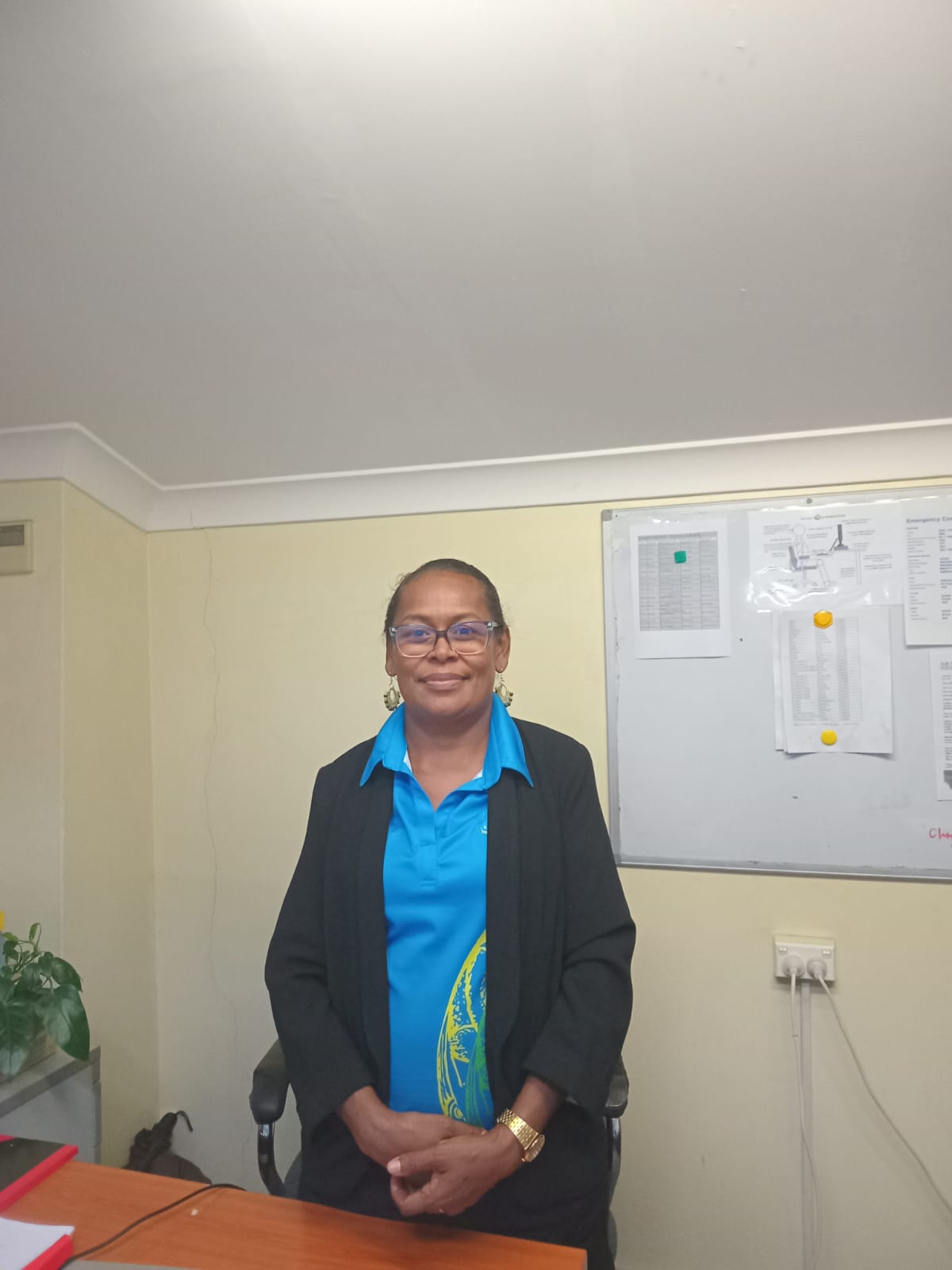 focusses on providing increased access to clean water and to bringing a customer focussed mindset to the work of that utility. She successfully completed Level 1 of the IWC’s Pathway Program in 2024 and then Level 2 in 2025.
“Before I joined Solomon Water, I was working for a fuel company, South Pacific Oil Limited, that was a subsidiary of the Solomon Islands National Provident Fund. What really mattered to me there was that the dividends went back to the people, to members of the Provident Fund.”
“That concept of working for an organisation that gives back to the community stayed with me. So when I saw the opportunity to work at Solomon Water, it immediately resonated. Water is an essential need, far more than fuel, and working in the water sector felt like an even deeper and more impactful way of serving people.”
“I joined Solomon Water in 2018 as a Customer Services Coordinator. At that time, customer services sat under finance, but even then I could see how important customer engagement and service were to the organisation’s future.”
“Access to water in the Solomon Islands is very different across communities. Even in Honiara, infrastructure isn’t always reliable. Working for an organisation that provides such a critical service to its people — especially for women, children and people with special needs — gave me a real sense of purpose.”
“When Solomon Water introduced its five‑year Corporate Strategic Plan for 2024–2028, customer centricity became a major focus. That led to escalation of priority, focus and commitment, with customer services becoming its own division.”
“That’s when my role evolved into Manager Retail, leading the Customer Services Division and becoming part of the SW Executive and Leadership Team. Looking back, I see how passion, purpose, and timing all came together to shape my pathway into leadership.”
How has investing in leadership development impacted you and your work?
“Before leadership training, I honestly believed leadership was only for people at the top — people with titles, qualifications, or many years of experience. Through the Pathway leadership program, I learned that leadership is for anyone. It’s about influence, passion, and stepping forward to create change, not about your position.”
“The training really helped me develop self‑awareness and self‑leadership. I began reflecting more intentionally on my behaviour; waking up early, thinking about the decisions I made, and asking myself what I could do better.”
“I started actively seeking feedback from my team and colleagues. That helped me understand both my strengths and my weaknesses, where I should lean in, and where I needed to grow.”
“One big shift was confidence. Previously, I could communicate informally, but I struggled in professional settings. Leadership development helped me open up, challenge myself, and step into spaces where I felt uncomfortable but knew I needed to be.”
“Now, as part of the Executive and Leadership Team, I need to show up, speak up, contribute constructively, and engage across departments and with external stakeholders. The Leadership Pathway program training made that possible. It helped me realise that leadership is not about perfection. It’s about learning, growth, and being willing to lead yourself first.”
What are the most challenging aspects of leadership for you?
“One of the biggest challenges I face in leadership is managing change. Not everyone is comfortable with change, and resistance often comes from uncertainty or fear — especially around job security.”
“At Solomon Water, we are undergoing significant organisational change: becoming more customer‑focused, improving systems, and changing long‑standing processes. That affects multiple teams across the organisation.”
“As a leader, my responsibility is to walk people through that change — to explain what’s happening, why it’s necessary, and how it aligns with our vision, mission and values.”
“Communication is critical. I’ve learned to use storytelling to help people imagine what the future looks like. When people can see themselves in the change, resistance softens.”
“Change doesn’t happen overnight. It takes time, trust, and consistent communication. Leadership is about being present, inclusive, and patient throughout that process.”
“Leading change has taught me that empathy and clarity are just as important as strategy.”
What does the future look like in terms of your leadership practice and development?
“Even though I’m now part of the executive team, I don’t see leadership development as something that ends. It’s continuous learning. I’m always learning, through books, articles, conversations, and observing other leaders. Every experience adds something to my leadership practice.”
“Going forward, I want to focus more on strategic networking — building meaningful connections beyond Solomon Water, across government, donors, utilities and the wider water sector.”
“I see leadership as being adaptable and open. Not every lesson will apply, but you take what fits and use it in ways that serve your organisation and your people.”
“Leadership for me is about staying curious, staying connected, and continuing to grow for myself, my team, and the communities we serve.”
Closing Thoughts
“Leadership development gave me the confidence to step forward and believe that I belong in leadership spaces. If my story can help other women and young water professionals — especially in the Pacific — to push themselves, speak up, and discover what they’re capable of, then that’s incredibly meaningful.”
More information
If you want to learn more about leadership development then please read more about Water Leadership Program (if you are living in AU/NZ) or Pathway Program (if you are living and working in another country). Contact us on IWC_training@griffith.edu.au for the opportunity to talk through your aims and needs. We are always happy to partner and collaborate.
The Leadership Stream – Developing more leaders to tackle complex water management challenges
Episode 6 – Ala Al Dwairi, International Union for Conservation of Nature (IUCN)
Introduction
Welcome to this Episode of The Leadership Stream blog series from the International WaterCentre (IWC).
Water leadership is an essential process to ensure that teams, projects, programs and processes of change are successful. Water leaders work collaboratively to achieve a common direction and sense of purpose, to align resources with that direction and generate motivation and commitment to success (read more here). They require particular skill sets and behaviours to be effective in this work, skills and behaviours that can be developed through a mix of approaches including conscious practice, feedback, coaching, mentoring and learning from research about what works and why.
The purpose of this blog series is to profile emerging water leaders globally, their practices, and how they go about improving their capabilities through leadership development in various ways. Through this our aim is to build wider appreciation of the value of engaging in water leadership development, and ultimately to foster the growth of water leadership capacity globally.
Meet Ala Al Dwairi – our profiled water leader
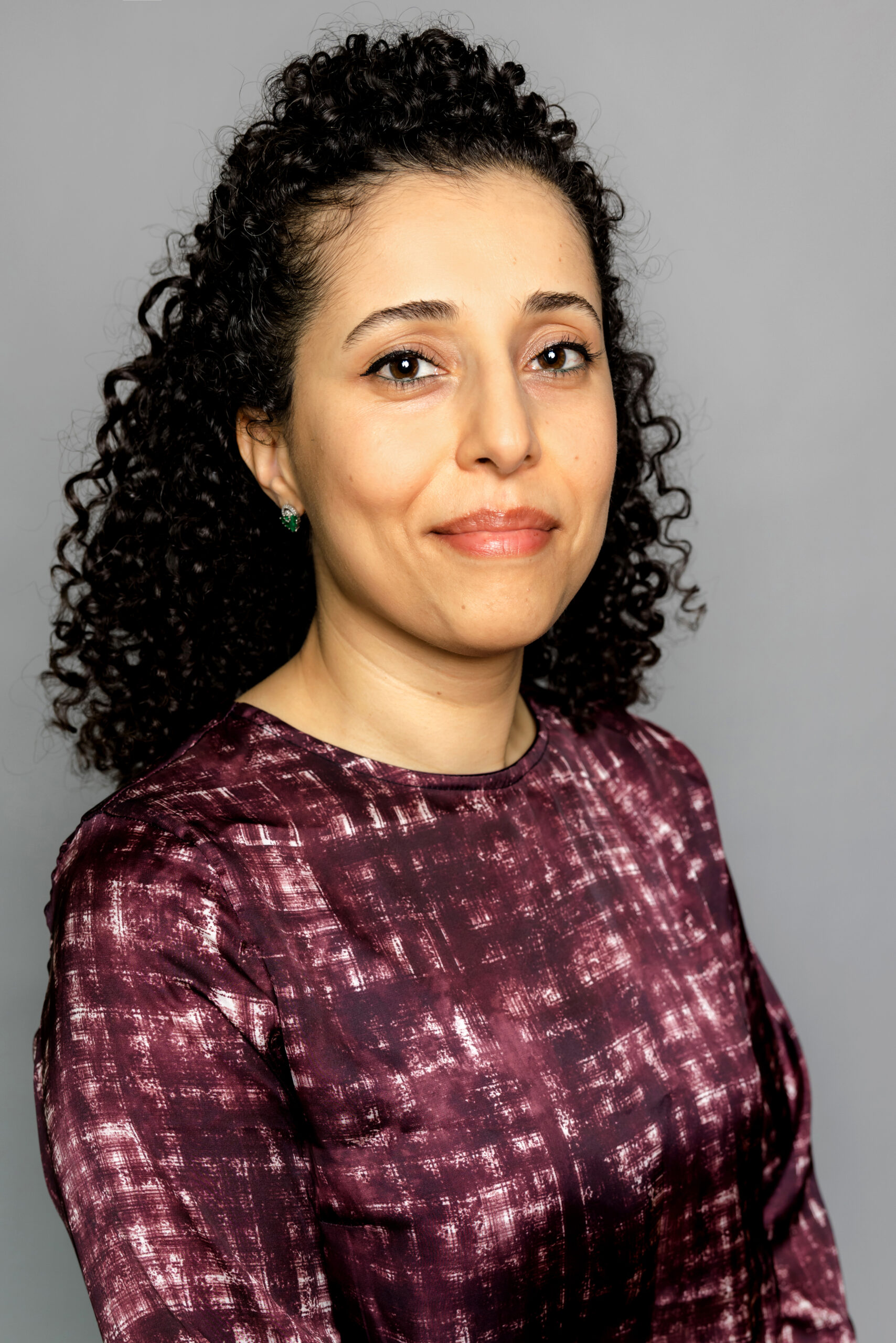 Ala Al Dwairi is a natural infrastructure officer whose career spans civil engineering, ecotourism, academic research, and global water conservation and management. From designing urban water systems in the MENA region to leading international initiatives at IUCN, Ala’s journey reflects adaptability, curiosity, and a commitment to tackling complex environmental challenges. In this interview, Ala shares her story and insights on leadership in the water sector.
We will start off by building a picture of Ala’s backstory – how and why did she move into the water (and land) management sector and end up working with the IUCN?
“My organization isn’t a water utility, but water has always been part of my work. I started as a civil engineer, designing urban sites and controlling water flow, how to divert it, how to keep risks away. It was all about boundaries and AutoCAD plots, connecting water to channels without asking where it goes next. That never sat right with me.”
“Even as a young engineer, I kept asking: we connect water to this channel, and then what? Where does it go? For the engineering company, that was irrelevant because it fell outside the project boundary. That disconnect made me uneasy. I couldn’t see myself doing this for my entire career.”
“So I made a big shift, zero to one hundred, and worked at an ecolodge in Jordan. It was completely off-grid, powered by renewables, and sourced water from a natural spring. I learned how conservation and business can coexist and benefit local communities. That experience planted the idea that I could live and work in harmony with nature.”
“From there, I pursued a master’s in urban climate and sustainability in Glasgow and Finland. I researched projects like Scotland’s Smart Canal, which showed me how cities can manage water sustainably by integrating natural infrastructure. Later, I spent three years in academic research on water security and data-to-decision frameworks, focusing on policy and governance in Jordan and Germany.”
“Today, at IUCN, my work spans water conservation, food security, nature-based solutions, and financing. Every project forces me to wear a different hat. I can’t define myself by one title – I work on water in the most integrated way possible.”
Tell us a story of how investing in leadership development has impacted you and your work

Lake Geneva, Switzerland
“The Pathway Leadership Program was a turning point because it tied everything together for me. I had this diverse background; engineering, ecotourism, academia, intergovernmental work, but I never thought of myself as a leader. The program gave me language and tools to reflect on those experiences and make leadership intentional.”
“Before Pathway, I practiced leadership without realizing it. For example, I was only 24 when I decided engineering wasn’t for me. I made that decision, acted on it, and planned an entire study program abroad. Later, in Glasgow, I volunteered as class representative for two years. I took on responsibilities without thinking of them as leadership acts.”
“Pathway changed that. It brought awareness and intentionality. Now, when I do things, I think of them through a leadership lens. It also pushed me to take on projects without certainty – something I used to avoid. For Level 2, I launched the Glacier Action Network. I started with nothing, built alliances, convinced stakeholders, and created something that now exists as an initiative within IUCN.”
“Looking back, I see the power bases I built and the networks I cultivated. I had to reach out to people, sit with them, and align visions. These were leadership traits I never acknowledged before. The program also taught me to slow down and celebrate progress—something I’ve never done in my life. I’ve always jumped from one project to another without pausing. Reflection was groundbreaking for me.”
What are the most challenging aspects of leadership for you?
“Self-leadership is the hardest. I’ve always swung between extremes; engineering to ecotourism, Jordan to Finland, academia to intergovernmental work. For years, I criticized myself for not fitting a mold. Pathway helped me accept that adaptability is my strength and gave me the term ‘adaptive leader.’ That changed how I present myself and navigate my work.”
“Another challenge is emotional intelligence. Initially, I thought communication meant better presentations or speaking skills. But real communication comes from self-awareness, regulation, and understanding social cues. It’s deeper than words, it’s about connecting authentically. I now see that emotional intelligence underpins communication.”
“Power bases are another challenge. I grew up in a hierarchical culture where leadership wasn’t nurtured. Now I work in flat, flexible environments that require influence without authority. Building power bases aligned with my values – authenticity, honesty, and care is something I’ll keep working on.”
“And then there’s complexity. Water connects to everything, food, energy, ecosystems. Leading in this space means navigating competing priorities and building consensus among diverse stakeholders. It’s challenging, but it’s also what makes the work exciting.”
What does the future look like in terms of your leadership practice and development?
“I’ve made peace with my style — I’ll keep swinging between roles and reinventing myself. Pathway helped me embrace that this is who I am. I like to challenge myself, take on new projects, and learn new skills.”
“In five years, I’ll still be in water management, but working on completely different projects with new skills. I’m already exploring data analytics, AI, and business intelligence because that’s where the world is heading. Even if these aren’t required by my current role, I want to stay relevant and ahead.”
“Leadership for me means staying adaptable, challenging myself, and embracing uncertainty. It’s about creating impact while growing personally and professionally. I see myself continuing to lead initiatives that push boundaries—projects that integrate technology, nature-based solutions, and policy innovation.”
“Ultimately, leadership development will remain central to my journey. It’s the foundation for navigating complexity and driving change.”
Closing Thought: Why Water Professionals Should Invest in Leadership Development
“Leadership isn’t about having all the answers, it’s about starting without them. In the water sector, complexity and uncertainty are constants. Leadership development helps you reframe uncertainty as opportunity, build resilience, and lead with confidence. It’s not just about advancing your career; it’s about shaping solutions for people and the planet.”

Dar Es Salam, Tanzania
The Leadership Stream – Developing more leaders to tackle complex water management challenges
Episode 5 – SA Abdullah Al Mamun
Introduction
Welcome to this Episode of The Leadership Stream blog series from the International WaterCentre (IWC).
Water leadership is an essential process to ensure that teams, projects, programs and processes of change are successful. Water leaders work collaboratively to achieve a common direction and sense of purpose, to align resources with that direction and generate motivation and commitment to success (read more here). They require particular skill sets and behaviours to be effective in this work, skills and behaviours that can be developed through a mix of approaches including conscious practice, feedback, coaching, mentoring and learning from research about what works and why.
The purpose of this blog series is to profile emerging water leaders globally, their practices, and how they go about improving their capabilities through leadership development in various ways. Through this our aim is to build wider appreciation of the value of engaging in water leadership development, and ultimately to foster the growth of water leadership capacity globally.
Meet SA Abdullah Al Mamun (or Mamun for short) – our profiled water leader
In this fifth episode of the blog we  talk with SA Abdullah Al Mamun, a water,sanitation and urban development professional with over two decades of experience spanning NGOs, UN agencies, and development banks. He began his professional journey in Bangladesh with community-focused water initiatives, and has subsequently contributed to projects ranging from small-scale technological solutions to major infrastructure programs throughout South Asia. Today, as a mid-level professional at the Asian Development Bank, Mamun is passionate about leadership development and its role in tackling complex water challenges. He successfully completed Level 1 of the IWC’s Pathway Program in 2024 and then Level 2 this year, 2025.
We will start off by building a picture of Mamun’s backstory – how and why did he move into the water sector and ultimately end up working with the ADB?
“By training, I’m a civil and environmental engineer. After graduation, I joined a national NGO in Bangladesh called Prodipon. They worked on microcredit and development projects like water supply, sanitation, and waste management. My first role was Research Associate for an EU-funded project on Developing an Integrated Solid Waste Management Framework in South Asia.”
“Later, I moved into water supply and sanitation projects because Bangladesh had received significant funding for WASH programs. That was the start of my journey in the water sector.”
“I then joined Practical Action (formerly Intermediate Technology Development Group), a UK-based NGO. This gave me exposure to international projects across South Asia, focusing on small-scale water technologies. Bangladesh is one of the most climate-vulnerable countries, facing challenges like arsenic in groundwater, iron contamination, and salinity in coastal areas. We worked on community-based solutions—pond sand filters, rainwater harvesting, manage aquifer recharge, and traditional methods like the ‘three pitchers’ system. It was fascinating work.”
“Over time, I moved from Bangladesh projects to regional ones, gaining national and international exposure. Eventually, I joined UNICEF, then AFD (the French Development Bank), and finally the Asian Development Bank in 2021. Throughout, I consciously chose to stay in the water sector because it offers both professional growth and the chance to serve people. It’s noble work—addressing real challenges and improving lives.”
“What motivated me most was the social value. In water, you work closely with communities and a wide range of stakeholders. You learn from them, and you see the direct impact of your work. That’s something you don’t always get with roads or bridges.”
How has investing in leadership development impacted you and your work?
“Leadership training has been a turning point in my career. In 2011, I completed a year-long ‘Young Leadership Program’ funded by FK Norway. It included international postings in Bhutan and intensive training. That experience taught me that leadership isn’t just about big names like Abraham Lincoln or Martin Luther King—it’s about managing projects effectively, building partnerships and creating real impact for the people.”
“I learned how to make quick decisions, work with diverse teams, and communicate clearly with teams and stakeholders. Those skills helped me lead impactful projects that benefited poor communities and brought real change at the ground level.”
“Fast forward to today: as a mid-level staff member at ADB, I realized I needed to sharpen my leadership skills again to move from national to international roles. That’s why I invested in the IWC Pathway Leadership Program. I paid for Level 1 myself because I know leadership development changes lives—not just professionally, but personally and socially. Level-2 was funded by my organization, ADB.”
“The program gave me time for self-reflection, something that’s hard to find in a busy organization. It improved my communication, decision-making, and stakeholder engagement skills. It even helped in family life—clear communication and trust-building matter everywhere.”
“Leadership development builds confidence, emotional intelligence, and the ability to work with diverse teams. It’s about continuous learning and practice. For me, it’s also about self-realization—understanding your strengths and weaknesses and working on them.”
What are the most challenging aspects of leadership for you?
“Managing expectations in a multicultural and multisectoral team is tough. People have different priorities, and sometimes what they want doesn’t align to prepare and delivery impactful projects and programmes. Convincing people, building trust, and keeping everyone motivated is a constant challenge. Trust-building takes time, especially in international organizations where teams change frequently. You work with someone for a year or two, then they move on. Trust doesn’t happen overnight—it’s a long process.”
“Another challenge is practicing leadership consistently. We’re not born leaders—it takes effort, reflection, and ongoing practice to develop those skills. You have to keep going back to the literature, keep practicing, and keep improving.”
“Emotional intelligence is also critical. Understanding what your team members want, even when it doesn’t align with the bigger picture, and finding a way forward—that’s challenging.”
What does the future look like in terms of your leadership practice and development?
“I’ve set a personal goal: to move into an international role within the next one to two years. I want to contribute beyond Bangladesh, applying what I’ve learned to projects across Asia. Leadership development will be key to achieving that.”
“The Pathway Program’s second phase gave me practical tools—emotional intelligence, stakeholder engagement, decision making and communication skills. These are essential for leading large infrastructure projects and diverse teams. I particularly enjoyed the one-to-one coaching. It gave me the chance to ask, ‘What are my weaknesses? How can I improve?’ That feedback is invaluable.”
“Ultimately, leadership is about working with people, building trust, and creating impact. That’s the journey I’m committed to.”
Closing Thoughts
“Leadership isn’t optional in the water sector—it’s essential. Our work is complex, involving multiple stakeholders, driving innovations, scaling best practice, aligning with organization and government, and competing priorities. Technical skills alone won’t solve these challenges. Leadership gives you the ability to communicate clearly, build trust, and make decisions that create real impact.”
“Investing in leadership development is investing in yourself—and in the communities you serve. It shapes not only your career but also your confidence, relationships, and ability to drive change. If you want to influence the future of water management, leadership is the key.”
More information
If you want to learn more about leadership development then please read more about Water Leadership Program (if you are living in AU/NZ) or Pathway Program (if you are living and working in another country). Contact us on IWC_training@griffith.edu.au for the opportunity to talk through your aims and needs. We are always happy to partner and collaborate.
The Leadership Stream – Developing more leaders to tackle complex water management challenges
Episode 4 – Liam Whelan
Introduction
Welcome to the fourth episode of this blog series from the International WaterCentre (IWC).
Water leadership is an essential process to ensure that teams, projects, programs and processes of change are successful. Water leaders work collaboratively to achieve a common direction and sense of purpose, to align resources with that direction and generate motivation and commitment to success (read more here). They require particular skill sets and behaviours to be effective in this work, skills and behaviours that can be developed through a mix of approaches including conscious practice, feedback, coaching, mentoring and learning from research about what works and why.
The purpose of this blog series is to profile emerging water leaders globally, their practices, and how they go about improving their capabilities through leadership development in various ways. Through this our aim is to build wider appreciation of the value of engaging in water leadership development, and ultimately to foster the growth of water leadership capacity globally.
Meet Liam – Lead high voltage electrical engineer from Sydney Water
 In this fourth episode of the blog we talk with Liam Whelan, Lead High Voltage Engineer with Sydney Water. Liam completed the IWC’s Water Leadership Program (WLP) in October 2024, earning a Certificate of Excellence. We will start off by building a picture of Liam’s backstory – how and why did he move into the water sector and the role that he occupies with Sydney Water?
From starting out as an apprentice electrician to being the lead high voltage engineer at Sydney Water, Liam’s career has been a steady climb through seizing opportunities, stepping into challenging roles, and continually investing in his own development.
“I was in my last year of my electrical apprenticeship when Sydney Water outsourced their apprenticeships to a training company. I was lucky enough to finish my time with Sydney Water at Bondi sewage treatment plant — and even luckier to be offered a job straight away.”
“From there I got my instrumentation trade, and I was also doing a lot of soccer coaching, which helped develop my leadership skills. I acted up as supervisor several times before landing a permanent supervisor role at North Head treatment works, leading and managing a team of around 20 mechanical and electrical staff.”
“Two weeks after I got that role, Sydney Water outsourced all inhouse maintenance. It was a big shake-up, but I transferred into the new service provider and moved into high voltage work — a niche area with a skills shortage. That eventually led me back into an engineering role, and now I am the lead in the high voltage engineering team. It’s dynamic, challenging, and keeps me busy — and it’s what opened the door to the Water Leadership Program.”
How has investing in leadership development impacted you and your work?
“The biggest change for me has been active listening. It sounds simple, but it’s been transformative. Before the program, I had feedback that I was cutting people off. Now I consciously listen, paraphrase back, and really take in what’s being said. It’s improved relationships, built trust, and created a better team culture.”
“I’ve also learned how to prepare for and manage difficult conversations. Right now, we’re going through a tough transition with a change in service providers — some long-time contractors I’ve worked with aren’t being taken on by the new company. It’s been the hardest leadership decision I’ve faced, but the program helped me approach it with empathy, honesty, and clarity.”
“Mentoring has been a big part of my growth. I’ve been fortunate to have mentors both inside and outside Sydney Water — people with high emotional intelligence who’ve guided me through challenges and helped me build resilience.”
What are the most challenging aspects of leadership for you?
“Right now, I’ve got two big challenges. The first is the emotional side — managing through the service provider transition and supporting people while making tough calls. The second is strategic — bringing others on the journey as we digitise Sydney Water’s high voltage network.”
“That means working across business units, aligning with digital teams, and navigating issues like cyber security. In government organisations, people often like to ‘stay in their lane’. Part of my job is to challenge that, show the benefits, and enable others to act.”
“It’s about balancing technical credibility with influencing skills — knowing your stuff but also understanding other people’s priorities and language so you can connect with them.”
What does the future look like in terms of your leadership practice and development?
“I’ve been revisiting my leadership plan from the Water Leadership Program, and one thing I still want to do is join Toastmasters to work on my public speaking. Stepping outside my comfort zone is a must for the next stage of my leadership journey.”
“I’m also considering moving beyond electrical into broader leadership roles — possibly through project management. Sydney Water has a lot of major projects on, so that could be a growth path for me. It’s about developing new skills, keeping myself relevant, and opening up options.”
“The program helped me deal with imposter syndrome and made me more willing to take on challenges. I’m seeking feedback more, saying ‘no’ when needed, and not being afraid to step into big tasks. That confidence is what will carry me into whatever comes next.”
Final reflections
Liam’s story shows that leadership growth often comes from saying yes to challenges — and sometimes from learning when to say no. His focus on listening, building relationships, and pushing himself beyond his comfort zone offers a model for water professionals who want to grow their impact in an evolving sector.
More information
If you want to learn more about leadership development then please read more about Water Leadership Program (if you are living in AU/NZ) or Pathway Program (if you are living and working in another country). Contact us on IWC_training@griffith.edu.au for the opportunity to talk through your aims and needs. We are always happy to partner and collaborate.
The Leadership Stream – Developing more leaders to tackle complex water management challenges
Episode 3 – Kathryn Buehrig
Introduction
Welcome to the third episode of this blog series from the International WaterCentre (IWC).
Water leadership is an essential process to ensure that teams, projects, programs and processes of change are successful. Water leaders work collaboratively to achieve a common direction and sense of purpose, to align resources with that direction and generate motivation and commitment to success (read more here). They require particular skill sets and behaviours to be effective in this work, skills and behaviours that can be developed through a mix of approaches including conscious practice, feedback, coaching, mentoring and learning from research about what works and why.
The purpose of this blog series is to profile emerging water leaders globally, their practices, and how they go about improving their capabilities through leadership development in various ways. Through this our aim is to build wider appreciation of the value of engaging in water leadership development, and ultimately to foster the growth of water leadership capacity globally.
Meet Kathryn from the Department of Water and Environmental Regulation
 In this third episode of the blog we talk with Kathryn Buehrig, Principal Water Planner with the Western Australian (WA) State Government Department of Water and Environmental Regulation (DWER). Kathryn completed the IWC’s Water Leadership Program (WLP) in October 2024, earning a Certificate of Excellence. We will start off by building a picture of Kathryn’s backstory – how and why did she move into the water sector and the role that she occupies with DWER?
Her journey into the water sector wasn’t a straight line. From an early inspiration sparked by dolphins in Western Australia to leading diverse teams tackling complex water planning challenges, her story is one of passion, adaptability, and a commitment to personal and professional growth.
“When I was 14, I went on a family holiday to Monkey Mia in WA — it’s where dolphins swim into shore every day to interact with people. I met scientists working with the dolphins, one of them an environmental scientist. From that day on, I was set on studying environmental science.”
“I thought I’d be working with critters — endangered animals, conservation work — but when I left University, I took a Green Corps traineeship doing on-ground works like fencing, weeding, and waterways restoration. Through that, I met someone from the Water and Rivers Commission. They mentioned jobs going in water licensing, and that’s how I found my way into the State Government.”
“Over the years, our Department has changed names multiple times with machinery-of-government changes, but I’ve stayed connected to the water space. It’s the variety, the constant learning, and the challenges — especially with WA’s unique reliance on water and the impact of climate change in the southwest — that keep me passionate. This year marks 25 years since I started with the Department and issued that first water licence. That sounds like a long time, but it’s gone fast. I’m still learning and enjoying tackling WA’s water challenges”
How has investing in leadership development impacted you and your work?
“A Certificate IV in Leadership gave me the nuts and bolts — project management, HR, budgeting, systems — but the Water Leadership Program was where I really unpacked self-leadership and confidence. I realised that just because I don’t look or sound like other leaders I’ve had, it doesn’t mean I can’t lead. I can do it in my own way, bringing my own sense of self.”
“That change in confidence has been huge. It’s made me more willing to step out of my comfort zone — like asking to act in the Principal Water Planner role. It felt uncomfortable to even ask, but it paid off.”
“Leading a small, diverse team — from a near-retiree to a new graduate — has been a great space to apply what I’ve learned. It’s not just about program planning or deadlines. It’s about recognising people’s strengths, putting them in the right places, and encouraging their own self-leadership.”
“Even outside of work, I have been able to apply what I’ve learnt — whether in parenting or volunteering with my choir — where it’s about cultivating confidence and nudging people to try new things.”
What are the most challenging aspects of leadership for you?
“Navigating organisational change is one of the hardest things. We’ve had repeated restructures, a move to hot-desking, flexible work — people get change fatigue. Especially when you’ve been through it before, it’s easy to slip into ‘here we go again’ thinking. My challenge is to model positivity and keep my team resilient and engaging in ‘above the line’ behaviours.”
“The other challenge for me is influence — making sure water planning gets the attention it deserves in a political environment where other priorities dominate. You need allies, good advocacy skills, and the ability to connect what you’re doing to other people’s agendas.”
“The stakeholder mix is diverse: hydrogeologists, climate modellers, developers, miners, other agencies, traditional owners. You need to switch hats constantly — breaking down technical language for some, framing strategic benefits for others.”
“I’ve also learned the value of building on existing relationships, especially with our department’s regional office teams, who already have deep local connections. There’s no point reinventing the wheel — but there’s a huge opportunity in dovetailing with the relationships that already exist.”
What does the future look like in terms of your leadership practice and development?
“I’ve kept my individual leadership development plan updated since the Water Leadership Program — it provides an ideal vehicle for keeping myself on track.”
“Right now, my focus is on developing strategic leadership — pulling together the many pieces of water planning, thinking decades ahead, and making sure we’re future-proofing WA’s water systems. That means getting better at networking across sectors and building alliances that last.”
“Mentoring is a big part of my future leadership practice. I’ve recently become part of our Department’s formal mentoring program, because I wanted to be able to share the leadership skills I’ve been learning in a more formal way. . Seeing my mentee align her work with her passions, having those lightbulb moments — that’s as rewarding for me as it is for her.”
“I’m also looking at models from other jurisdictions, like Queensland’s Strategic Water Initiative, where there’s a clear link between strategic thinking, policy, and cross-sector collaboration. The idea of a state water strategy is gaining traction here, and I’d love to adapt something like that for WA.”
Final reflections
Kathryn’s story is a reminder that leadership is as much about authenticity and connection as it is about technical skills. Her willingness to step forward, embrace challenges, and help others grow embodies the kind of leadership our sector needs — in WA, across Australia, and globally.
More information
If you want to learn more about leadership development then please read more about Water Leadership Program (if you are living in AU/NZ) or Pathway Program (if you are living and working in another country). Contact us on IWC_training@griffith.edu.au for the opportunity to talk through your aims and needs. We are always happy to partner and collaborate.
Water Leadership Program & New Blog The Leadership Stream
Author: Dr Brian McIntosh, Education and Training Lead
“Management makes a system work. It helps you do what you know how to do. Leadership builds systems or transforms old ones.”
― John P. Kotter, Leading Change
Leadership skills are core to driving change or transformation, to innovating and adapting. They underpin effective team, project and program performance, and are responsible for enabling water leaders to participate in the collaborative, social processes that create Direction (shared goals), Alignment (of work to achieve those goals) and Commitment (to achieving those goals) (read more on this, the DAC model here). We need to do much more to build those skills in water professionals, and to grow water leaders at every level in organisations if we are to be able to effectively adapt to climate change, to protect and restore our catchments and waterways, and to ensure universal access to clean water and sanitation.
Luckily, we know quite a lot about different leadership roles that are involved in driving change in the water sector (read more here) and, crucially, how to go about developing leaders able to play those roles. There is a rich body of research into leadership development – what works, and what is needed to effectively build the skills and behaviours to participate as a leader in the process of leadership. Leadership development requires careful, evidence based program design if it is to be effective.
The IWC is committed to using research and evidence based methods for everything that it does. The Water Leadership Program incorporates many of the key principles and practices that we know from research are required for effective development of water leaders:
- Design and content (e.g. conceptual models and leadership tools) should be informed by sound research that is relevant to people playing different roles in the water sector.
- Consistency with the ‘70:20:10 rule’ of leadership development which suggests that approximately 70% of leadership development occurs through conscious practice, 20% through developmental relationships (e.g. coaching, mentoring and feedback), and 10% from structured training which plays an important amplifying effect.
- Be transparent in program design, content and evaluation (e.g. communicated through journal papers, conference papers and websites).
- Use a feedback-intensive design – these are most likely to generate positive behavioural change and a positive return on investment to participants and their employing organisations
- Help participants manage their own development as a leader over the long term as leadership development is a lifelong, challenging activity.
- Include numerous opportunities for participants to build self-awareness, challenge themselves, get frequent feedback from their colleagues, receive support from colleagues, and deeply reflect.
- Ensure there is a clear aim to build the individual capacity of water leaders to influence and drive change (leader development), as well as their capacity to work with other leaders to collectively drive group-based leadership processes (leadership development).
- Prepare emerging leaders for current and future challenges in the water sector, as well as the ability to play different roles in the water sector. These roles include, but are not limited to, the champion leader, enabling (adaptive) leader, cross-boundary team leader, thought leader, strategic leader and trusted advisor roles.
- Minimise the use of ‘lecture style’ presentations and maximise opportunities for interaction, discussion, self-assessment, peer-to-peer information sharing and reflection.
- Comprehensively evaluate the program each time it is run, focus on continuous improvement, and be subject to a major review every 10 years (which was last done in 2021 for the IWC Water Leadership Program).
- Include ‘accountability mechanisms’ to ensure that participants fully commit to the program.
To help uncover what leaders and leadership looks like in practical terms we’ve launched a new blog series, The Leadership Stream. We see water leadership as absolutely fundamental to all of our water management ambitions and needs. Our hope is to encourage more employers and future water leaders to invest and to embark on the development journey themselves. Episode 1 of the blog was based around an interview with Lisa Andersens from New South Wales Department of Climate Change, Energy, Environment and Water and can be read here. Episode 2 was based around an interview with Mark Lawrence of CMP Consulting and can be read here.
If you are based in Australia or NZ and interested in stepping up and embarking on a journey to develop your water sector leadership skills, then the Water Leadership Program will provide you with a program that contains all the major elements of effective leadership development. We have Scholarships available until 14th September and direct program applications until 31st October.


The Leadership Stream – Developing more leaders to tackle complex water management challenges
Episode 2 – Mark Lawrence
Introduction
Welcome to the second episode in this blog series from the International WaterCentre (IWC).
Water leadership is an essential process to ensure that teams, projects, programs and processes of change are successful. Water leaders work collaboratively to achieve a common direction and sense of purpose, to align resources with that direction and generate motivation and commitment to success (read more here). They require particular skill sets and behaviours to be effective in this work, skills and behaviours that can be developed through a mix of approaches including conscious practice, feedback, coaching, mentoring and learning from research about what works and why.
The purpose of this blog series is to profile emerging water leaders globally, their practices, and how they go about improving their capabilities through leadership development in various ways. Through this our aim is to build wider appreciation of the value of engaging in water leadership development, and ultimately to foster the growth of water leadership capacity globally.
Meet Mark – our second profiled water leader

In this second episode of the blog we talk with Mark Lawrence who started a new role this year as General Manager of CMP Consulting Group, having moved from a Major Projects management role at Melbourne Water. Mark gained a Certificate of Excellence when he completed the IWC’s Water Leadership Program (WLP) in late 2024, joining over three hundred Program Fellows spread across Australia and New Zealand. We will start off by building a picture of Mark’s backstory – how and why did he move into the water sector and the role that he now occupies with CMP Consulting?
“I guess it’s probably a little bit by accident. Whilst my degree was in Civil Engineering with European studies (I studied German) my masters was in bridge engineering. As part of my degree though I was able to go and work in Germany on various building sites, and one of the sites was a new house and swimming pool. So you can maybe say there’s a tenuous link there!”
“Following studies, my working career has been largely in the water industry though and has spanned working in construction, design and most recently working on the client side.”
“My first construction role was working on a potable water mains project over in Jamaica. We were delivering potable water to a township that hadn’t had potable water before. There’s a clear benefit there in terms of what that brings from a societal point of view and helping to deliver what we would just expect when we turn on the tap in the UK or Australia for example.”
“Following the successful commissioning and handover of the Jamaican project, I continued overseas for another couple of years (working on a power station project in remote Southern India) before returning to the UK and joining a design consultancy that specialised in water projects. During this time, I was able to complete my charterships in both Civil and Structural engineering.”
“I moved over to Australia in 2005, with the same company and continued to work predominately on water and sewerage projects. I moved from doing the design myself to then managing design, then project management as well as design management, then Team Leader.”
“I initially joined the company I’m back with now – CMP – in 2017 and this is where I got exposed to working on the Client side. I was seconded into Melbourne Water to help them with the management of their capital delivery. I worked on a number of high risk projects, through to April 2021, where I then moved formally across to as Project Director within Melbourne to head up the delivery of close to $1bn of capital projects at one of their major treatment plants. Following the successful implementation of the delivery strategy for these projects, I returned to CMP in my new role as General Manager”.
How has investing in leadership development impacted you and your work?
“Throughout my career, I’ve never really pursued becoming a MD or anything like that. Generally the trend has been towards more and more senior in terms of both project responsibility and then people responsibility through that journey. And probably it’s a combination of my managers seeing the opportunity in me and then me taking that opportunity when it’s given that’s allowed me to progress to my current position as General Manager.”
“The big projects always excite me, so over my career I have chased those rather than pursuing a structured approach to growing my leadership skills. Thinking of the 70:20:10 rule of leadership development (70% on the job learning, 20% peer based learning and 10% formal training) I think most of my leadership training and development has been on the job training with a level of oversight and guidance from my managers along the journey.”
“I believe that no feedback is bad feedback. I have always appreciated and actively encouraged feedback sessions. I love interrogating the information where you are doing well, but more to learn about the areas where I am open for growth. I do then try to incorporate the feedback into my development plans to improve and grow.”
“I think that the Coaching sessions are also very helpful to interpret feedback. I think even if you just take 10% of what happens out of any coaching sessions you will benefit. They help you both in terms of confidence that you are doing well, but they also open your eyes to the areas that you need to develop more.”
What are the most challenging aspects of leadership for you?
“I have always found time management to be quite challenging for me. I can easily fall into the trap of working long hours consistently, but there is real value in prioritising tasks, setting clear goals and managing time effectively both for me but also for my team. I recall the discussions around this at the IWC in person days where it reinforced the importance of working smarter not harder.”
“The other aspect that I would like to be more proficient at is the difficult conversation element of managing any team. Whilst I hope that this is not something that I need to call on regularly, I saw from a recent experience that it is important to ensure if a conversation is required it is held sooner rather than later, otherwise it can very quickly impact the broader team negatively.”
What does the future look like in terms of your leadership practice and development?
“I think the IWC Water Leadership Program came at just the right time for me, completing it as I did just prior to commencing my GM role with CMP. I therefore, have a fantastic suite of information to refer to, plus a wealth of knowledge gleaned from the in person and remote learning sessions.”
“Currently I would say I’m in a transformational leadership role. The company has strong aspirational goals to grow across Australia over the next 3 years but we’re just at the start of that now. So, it’s all about the messaging, a positive vision of the future, and emotionally connecting with the team to motivate and encourage.”
“I love creating high performing teams and this is a key element of my new role. I recognise that I will need to build trust with my colleagues, act with authenticity and provide the support and guidance that is needed to allow the team to grow and succeed.”
“The other area that I recognise as important in a leadership role, is that of self-reflection. It is a skill to build it into a working schedule, but once the habit is formed, I have found it to be very beneficial. It provides that opportunity to pause and look at what has gone well, what could be improved, and allows that continuous learning opportunity.”
“I will be looking for mentors to support my ongoing development. I have a couple of people in mind, and they will provide both the broader learnings and knowledge I will need but have also “been there and done that” so speak from experience.”
“As I reflect on my leadership journey, and most recently by participating on the IWC Water Leadership Program, I think the big take away for me is that whilst leadership is a journey, you don’t have to be a CEO or MD to be seen as a leader. And once you start looking at yourself as a leader, you’ll be amazed how much great stuff you’re already doing, but also what other avenues there are to grow and develop. I certainly still have lots still to learn, but that’s part of what makes leadership development a journey.”
More information
If you want to learn more about leadership development then please read more about the Water Leadership Program (if you are living in AU/NZ) or Pathway Program (if you are living and working in another country). Contact us at IWC_training@griffith.edu.au for the opportunity to talk through your aims and needs. We are always happy to partner and collaborate.
The Leadership Stream – Developing more leaders to tackle complex water management challenges
Episode 1 – Lisa Andersons
Introduction
Welcome to this new blog series from the International WaterCentre (IWC).
Water leadership is an essential process to ensure that teams, projects, programs and processes of change are successful. Water leaders work collaboratively to achieve a common direction and sense of purpose, to align resources with that direction and generate motivation and commitment to success (read more here). They require particular skill sets and behaviours to be effective in this work, skills and behaviours that can be developed through a mix of approaches including conscious practice, feedback, coaching, mentoring and learning from research about what works and why.
The purpose of this blog series is to profile emerging water leaders globally, their practices, and how they go about improving their capabilities through leadership development in various ways. Through this our aim is to build wider appreciation of the value of engaging in water leadership development, and ultimately to foster the growth of water leadership capacity globally.
Meet Lisa – our first profiled water leader

In this first episode of the blog we talk with Lisa Andersons who is about to move from being Skills and Training Co-ordinator with the New South Wales State Government’s Department of Climate Change, Water, Energy and Environment (DCCEEW) to a new role as Manager Workforce Futures within the same Department. She is at the time of writing about 2/3rds of the way through the IWC’s Water Leadership Program (WLP) and will be complete by October 2025. We will start off by building a picture of Lisa’s backstory – how and why did she move into the water sector and the role that she occupies with DCCEEW?
“I have always felt a really strong connection to water, from when I was a kid and learned to swim which quickly progressed to snorkelling and then scuba diving. I just love being anywhere near water, whether it be saltwater or fresh water. Throughout school I enjoyed any subject that had to do with environmental sustainability, but I also felt a strong drive to help people. I went on to study a Bachelor of Science at Griffith University, which was broad enough to keep my options open. Working in the water industry has given me the opportunities to combine environmental sustainability with helping people.”
“After working within a local water utility in scientific roles, for almost 15 years I moved into state government, which gave me the opportunity to shift my focus more broadly, rather than a single local government area.”
“My roles here rely on building trust and relationships with stakeholders, to improve training opportunities for operators within the water industry. I felt like this was the right time to invest in my professional development and enhance my leadership skills, to really have a positive impact within the organisation, and across the water sector.”
“I have recently been appointed to a new management role, and I am confident that I am the right person for the job. I’m excited to show my commitment to the industry and want to make some positive change.”
How has investing in leadership development impacted you and your work?
“A big part of my role is collaborating with different people across the industry – local water utilities, the training sector and broader water industry stakeholders. One of the big challenges is being able to influence with little authority. I’ve realised how important building trust and being authentic is to collaborating with different stakeholders and to really bring people along on the journey to influence and drive change.”
“Really listening and giving people the opportunity to speak: being inclusive is important. When you’ve built trust people are more likely to open up and say, well, these are the things that I’m concerned about and then we can work on trying to deal with those specific things rather than coming in, thinking that we know what the solution might be. Really slowing down, understanding the different perspectives and making sure we have the right people in the room, and knowing the audience. I think I’ve come a long way in stakeholder engagement, and I quite enjoy it, talking to different people from different backgrounds.”
“Understanding my strengths has also been really helpful for me. To understand the kind of leader that I want to be and that it’s OK to be different to other leaders. Developing my own leadership style and really focusing on being authentic, inclusive and building trust, valuing relationships and being able to bring people together, has been really valuable.”
“A lot of the time when we’re looking at our own strengths and weaknesses we focus on improving the weaknesses. Leadership development for me has also been about understanding what my strengths are as a leader and improving those and really getting the most value out of what those strengths are to help me with my day-to-day work. Also understanding different approaches to leadership, different styles and how and when to use them.”
“Leadership development has given me the confidence to really back myself, to be confident I’m in the right role, but also to understand where my gaps are. I know when I need to bring in other people with different expertise and perspectives, and to be able bring it all together.”
What are the most challenging aspects of leadership for you?
“In the role of Skills and Training Co-ordinator one of the most challenging aspects has been trying to influence without having a high position of power. And that will continue with my new role.”
“The new role itself will present challenges but will also be a position of privilege where I will be able to recruit my own team, inspire a shared vision and really work together to figure out the best way that the team can succeed. That will hopefully translate to some good results across the industry. I’m really looking forward to that challenge of building a team and working together to achieve positive results.
What does the future look like in terms of your leadership practice and development?
“Being an adaptive leader really resonates with me because, of course, in the water industry there’s a lot of external factors that we need to adapt to. So, it’s important to be flexible and agile and able to change our approach to get the best outcome.”
“Learning how to use the various tools we were given during the Water Leadership Program I think is going to be really useful for me. Practicing them, trying them out, being brave enough to try new things then reflecting on how well that worked and what can be improved.”
“Another thing that really has stood out to me about leadership practice and development is around empowering and enabling others to drive positive change. Supporting a new team and encouraging them and really wanting to see the best out of the team, empowering them to make positive change will be important in the future.”
“These are the things I’d like to keep working on and improving over the next couple of years but also knowing that leadership is a journey and there’s no end point. It’s not like you can get to a point and say, OK, I understand all there is to know about leadership now. That’s not the way it works. Instead, it’s being keen to grow and change and learn as we go. I find that challenge quite exciting.”
“I’m lucky enough to have some really great mentors and they play an important role in my on-going development. I have a lot of them within DCCEEW but one woman in particular who I catch up with regularly. I learn a lot from her around the intricacies of state government and how it all works. For example, briefings that go up to different levels within the organisation or up to the Minister and that whole decision-making process is quite structured in government and it’s really good to have that mentoring relationship with someone who can help me to understand what the processes are, the budgeting cycle, the political cycle and the politics.”
“I’ve also got a local mentor who I used to work with at the local water utility and I was speaking with him recently. I can be really open and honest with him and I trust his advice, including to trust my gut feel, and not second guess myself. Once you start talking to someone, you can read a lot. I think I am more aware now of myself through things that I’ve learnt within the Water Leadership Program around self-awareness and self-confidence.”
“I really recommend professionals in the industry investing in themselves to developing their leadership abilities. Once you have the mindset of identifying as a leader, you open yourself up to so many opportunities to grow and learn. Being a leader is so much more than being a manager, It is not based on your position within an organisation, but on your mindset and desire to influence positive change. “
More information
If you want to learn more about leadership development then please read more about the Water Leadership Program (if you are living in AU/NZ) or Pathway Program (if you are living and working in another country). Contact us at IWC_training@griffith.edu.au for the opportunity to talk through your aims and needs. We are always happy to partner and collaborate.
Ethical leadership: is there a crisis?
Written by Dr Andre Taylor, Leadership Specialist
From a Royal Commission into our banking and financial system to a ball tampering scandal involving our National cricket team, the last few years have seen many high-profile examples of unethical leadership. Does this represent a crisis with respect to ethical leadership, or just a few isolated examples? Is the situation improving, getting worse or staying the same? Should we be worried? Could I, as a leadership development specialist, do more to encourage developing leaders to make ethical leadership a central part of their ‘leadership signature’?
I’ve recently come to the view, albeit reluctantly, that there is a ‘crisis’ concerning ethical leadership in the society in which I live.
In this article I aim to:
- explain why I have come to this conclusion
- make the case that we will need more leaders who excel at ethical leadership in the foreseeable future
- explain what ethical leadership means to me
- share a practical tool to help assess and improve ethical leadership (i.e. five principles of ethical leadership)
- suggest some pathways we can take to promote more responsible forms of leadership.
The problem
Over the last few years, a number of case studies have caught my attention where there has been a lack of ethical behaviour by people playing leadership roles, and those aspiring to be leaders. While some isolated cases are to be expected, what has troubled me is:
- the number of these cases
- the extent to which they affect a broad range of institutions, including those that have core values around serving the community and the environment
- that they involve emerging as well as established leaders; and in some cases
- they involve some of the most highly educated leaders in our society.
In my home country of Australia, over the last two years we have seen three Royal Commissions expose unethical practices and a failure of ethical leadership. For example, the Royal Commission into Misconduct in the Banking, Superannuation and Financial Services Industry identified “serious misconduct in the banks, including fraud and bribery” (Robinson, 2018, p. 1). The commission concluded that the primary reason for widespread misconduct in the industry was “greed – the pursuit of such short-term profit at the expense of basic standards of honesty” (RCMBSFSI, 2018, p. 1). In some cases, such misconduct extended to the boardroom (Robertson, 2018).
In Australia, the Royal Commission into Institutional Responses to Child Sexual Abuse discovered and documented widespread, systemic failures of leadership, culture and governance to protect the wellbeing of children. These failures extended not only those organisations who had primary responsibility for the care of children, but those agencies who were responsible for investigating allegations of abuse. The scale and impact of the damage caused from these failures has been massive. To illustrate, just on the topic of abuse in Australian religious institutions, the Commission heard from 4,000 survivors who reported abuse occurring in 1,691 different religious institutions. Disturbingly, the Commission found that “the perpetrators we heard about in private sessions held various positions in religious institutions, but most held positions of leadership or authority” (RCIRCSA, 2017, p. 47).

As someone who spends much of my time working in the water sector, I also took an interest in the South Australian Murray Darling Basin Royal Commission, which aimed to explore the way water is managed in the iconic Murray Darling Basin. Water flowing through this enormous catchment (1 million km2) is the ‘lifeblood’ of numerous country towns, rural industries, unique ecosystems, and important indigenous cultural values. Among its findings, the Commission found “Commonwealth officials committed gross maladministration, negligence and unlawful actions in drawing up the multi-billion-dollar deal to save Australia’s largest river system” (McCarthy et al., 2019, p.1). One of the triggers for this commission was the resignation of New South Wales’ most senior water bureaucrat shortly after he was the focus of corruption allegations in an ABC Four Corners investigation on the Murray-Darling Basin (ABC, 2017).
One of the reasons the findings of these three Royal Commissions are so significant to me is that the organisations displaying a failure of ethical leadership were organisations with missions and values that focused on serving customers and the broader community, protecting children, protecting the health of the Murray Darling Basin and its people. How is it possible for such organisations to lose their way? Dr Simon Longstaff, Executive Director of the Ethics Centre reminds us that “people are inherently good” … but they “are susceptible to the greater threat of unthinking custom and practice. And this must change.” (AGSM, 2019, p. 2). Dr Longstaff convincingly argues for the need to create organisational cultures that normalise reflective practice to encourage people to remind themselves of their purpose, values and principles, question the status quo, and breaking the cycle of going with the flow (AGSM, 2019).
As a university educator, I have also been alert to the issue of ‘contract cheating’ within our major universities (see Main, 2019). The Australian Financial Review, in a 2019 interview with Dr Tracey Bretag from the University of South Australia, reported that organised “cheating services have expanded at an alarming rate across university campuses and the thriving industry has prompted the federal education department to crackdown on businesses offering to help tertiary students cheat on their exams and assignments” (Main, 2019, p. 1). What troubles me the most about this example of widespread unethical behaviour is that it involves our future leaders.

Sadly, there is no shortage of other examples. In 2018, the captain and vice-captain of the Australian cricket team were disgraced in South Africa after they admitted to being involved in a ball tampering incident (i.e. cheating) in a sport synonymous with fair play. In Australia, being the captain of the National cricket team is a distinguished leadership position. One of our most respected prime ministers, the honourable John Howard OM, AC, once referred to the captain of the Australian cricket team as the pinnacle of Australian leadership (Courier Mail, 2014).
I started to think that maybe Australia is a statistical anomaly, but international examples of unethical leadership are not hard to find. For example, in 2016, we learnt that it was possible to be democratically elected to arguably the most powerful political leadership role in the world after voters learned of a 2005 Access Hollywood tape in which Mr Trump reportedly talked about fame enabling him to sexually assault women (ABC, 2016). In 2019, we also learnt that it is possible to remain relatively popular as a US President despite the Washington Post documenting more than 10,000 reportedly false or misleading claims by the President (Kessler et al., 2019).
Why this matters
I believe there are three principal reasons why the current situation is unacceptable.
First, unethical leadership typically leads to harm. Individual cases exposed by the Australian Royal Commission into Institutional Responses to Child Sexual Abuse graphically highlight how irresponsible leadership can directly or indirectly impact people’s physical and mental health.
Second, the situation doesn’t appear to be getting significantly better in Australia. Leaders in our finance industry, for example, have never been more educated or better remunerated, yet the Royal Commission into Misconduct in the Banking, Superannuation and Financial Services Industry revealed widespread instances of unethical behaviour, irresponsible leadership, and toxic organisational cultures that put profit ahead of people. Although there has been a slight increase in the last 12 months in the level of trust in institutions across Australia as measured by the annual Edelman Trust Barometer, average levels of trust remain low and below 50%. Specifically, in 2019, the Edelman Trust Barometer asked 1,150 people from across Australia in 2019 whether they trusted a variety of institutions (e.g. government, business, traditional media, social media, etc.) to “do what is right”, and found that the average trust level was only 48% (Bailey, 2019). Dr Simon Longstaff reminds us that building trust is not particularly challenging. Organisations and their leaders need to simply declare “this is who we are and this is what we stand for, and act in a manner that is consistent with that” (AGSM, 2019, p. 2).
Third, the need for ethical leadership is going to increase in future years given macro trends affecting our society. In the foreseeable future, leaders in most sectors will be faced with complexity, rapid change, intense competition, globalisation, disruption, and new technology. In this environment leaders will need to carefully and skilfully navigate ethical dilemmas around challenging issues such as artificial intelligence, managing people’s private data, robotics and genetic engineering to name a few. As such, we have much work to do in bridging the gap between current practice and the capacity we will need in the foreseeable future with respect to ethical leadership.

What I mean by ‘ethical leadership’
I find the easiest way to understand the concept of ‘ethical leadership’ is to firstly explore what leadership means and then explore what ethical leaders do when they engage in leadership.
We can define ‘leadership’ as a process of influence that delivers direction (i.e. a shared understanding of common goals and strategy), alignment of activities and resources towards that direction, and a personal commitment to collective success (McCauley, 2014). From this perspective leadership is typically a group-based process, and is not limited to people in positions of authority (position power). Note that most modern definitions of leadership are amoral, meaning they accept that people can engage in responsible or destructive leadership.
Somewhat surprisingly, theoretical research on ethical leadership has lagged behind other aspects of leadership and is still relatively limited (Brown et al., 2005; Cuilla, 1998; Northouse, 2018). After a review of the available literature, Brown and Trevino (2006) concluded that ethical leaders are “honest, caring and principled individuals who make fair and balanced decisions. Ethical leaders also frequently communicate with their followers about ethics, set clear ethical standards and use rewards and punishments to see those standards are followed. Finally, ethical leaders do not just talk a good game – they practice what they preach and are proactive role models for ethical conduct.” (p. 597).
Gary Yukl and colleagues (2013) developed a measure of ethical leadership which provides a useful ‘checklist’ that leaders can use to reflect on whether they are engaging in the behaviours typically associated with ethical leadership. The items in their ethical leadership questionnaire (ELQ) are:
- shows a strong concern for ethical and moral values
- communicates clear ethical standards for members
- sets an example of ethical behaviour in his/her decisions and actions
- is honest and can be trusted to tell the truth
- keeps his/her actions consistent with his/her stated values (‘walks the talk’)
- is fair and unbiased when assigning tasks to members
- can be trusted to carry out promises and commitments
- insists on doing what is fair and ethical even when it is not easy
- acknowledges mistakes and takes responsibility for them
- regards honesty and integrity as important personal values
- sets an example of dedication and self-sacrifice for the organisation
- opposes the use of unethical practices to increase performance
- is fair and objective when evaluating member performance and providing rewards
- puts the needs of others above his/her own self-interest
- holds members accountable for using ethical practices in their work.
Five principles of ethical leadership
Following a review of literature on ethics in the context of leadership, Professor Peter Northouse (2018) identified five principles of ethical leadership. This framework is a practical tool that leaders can use to assess the quality of ethical leadership, and to guide leadership activities. These principles are described below:

- Ethical leaders respect others. They are sensitive to their impact on others and care about this impact. They listen to others, are tolerant of opposing points of view, and “treat others as ends in themselves and never as means to an ends” (p. 346).Example: a leader who genuinely consults with people before making a decision that may affect them.
- Ethical leaders serve others. They have a calling to serve and engage in servant leadership (Greenleaf, 1970). They selflessly prioritise serving the interests of others and act in ways that will benefit others. They care about the welfare of others, and engage in behaviours such as mentoring, empowering others and team building.Example: a leader who builds a shared vision for an initiative not by selling their own view, but by first undertaking a ‘listening tour’ to identify what their constituents need and value.
- Ethical leaders are just.They place a high priority on fairness and justice when making decisions, including demonstrating fairness towards individuals as well as the broader community.Example: an organisational leader who insists upon fair and transparent processes when recruiting staff, determining remuneration or selecting external service providers.
- Ethical leaders are honest. They demonstrate honesty and integrity, which helps to build trust, strengthen relationships and enhance their personal power. They are also transparent in their interactions with others, while being diplomatic and sensitive to the needs of others. They also follow through on commitments.Example: a leader who acknowledges that they made a mistake and takes responsibility for it.
- Ethical leaders build community. They are aware of the needs and aspirations of their communities and look to align their leadership activities to help meet community goals.Example: a leader who sees an opportunity to address a local problem that affects them directly by solving a larger, broader social problem, and collaborates with other leaders to create an initiative that serves the broader community.
Where to from here?
The first step in addressing a problem is to acknowledge that one exists. Hopefully this article contributes, in a small way, to that process.
As part of ‘self-leadership’, we all have opportunities to improve the extent to which we engage in ethical leadership. The five principles of ethical leadership framework is a useful framework to reflect on the opportunities we have to better respect others, serve others, demonstrate justice, fairness, honesty and integrity, and build community. An ethical leader would aim to ensure that these principles are a prominent part of their ‘leadership signature’.
In terms of promoting ethical behaviour and leadership by others, we each have opportunities within our spheres of influence. In particular, leaders with significant power (e.g. executives, thought leaders and mentors) can model the way for others. Executive leaders can shape organisational culture to promote ethical thinking, ethical behaviour and reflective practice. Leaders who engage in education and coaching can help developing leaders to ensure that ethical leadership is central to their developmental vision, and they build their capacity to identify ethical dilemmas, engage in ethical thinking, deeply reflect and apply the five principles of ethical leadership.
We have much work to do, and much is at stake. I urge all my colleagues who are involved in leadership development as role models, educators, mentors and coaches to create space for discussions, reflection and learning about ethical leadership. Together, we share a precious opportunity to help leaders to grow their capacity to influence others while ensuring they also have a strong personal commitment to ethical thinking and practice.
Dr André Taylor is the International WaterCentre’s Leadership Specialist and Program Coordinator for the Water Leadership Program. He teaches Masters students at several Australian universities, works closely with business, sustainability and water leaders, and manages his own consulting business. This article originally appeared on LinkedIn at https://www.linkedin.com/pulse/ethical-leadership-crisis-andre-taylor/
References
- Australian Broadcasting Commission (ABC) (2016). Donald Trump made vulgar comments about women during taping of Access Hollywood episode in 2005. Online article, ABC news website, accessed 12 July 2019. https://www.abc.net.au/news/2016-10-08/donald-trump-access-hollywood-vulgar-comments-women/7915146.
- Australian Broadcasting Commission (ABC) (2017). Murray-Darling basin: NSW’s most senior bureaucrat resigns over corruption allegations. Online article, ABC news website, accessed 12 July 2019. https://www.abc.net.au/news/2017-09-15/murray-darling-basin-nsw-top-water-bureaucrat-resigns/8951258
- Australian Graduate School of Management (AGSM) (2019). Leading with moral courage and strategic vision: The role of the ethical leader in an accelerated world. Online article, University of New South Wales Australian Graduate School of Management, accessed 12 July 2019. https://www.business.unsw.edu.au/agsm/the-leader/articles/Leading-with-moral-courage-and-strategic-vision-the-role-of-the-ethical-leader-in-an-accelerating-world
- Bailey, M. (2019). Australians show surprise leap of faith in Edelman trust survey. Online article, Australian Financial Review, accessed 12 July 2019. https://www.afr.com/leadership/australians-show-surprise-leap-of-faith-in-edelman-trust-survey-20190122-h1abwv.
- Brown, M., & Trevino, L. (2006). Ethical leadership: A review and future directions. The Leadership Quarterly, 17, 595–616.
- Brown, M., Trevino, L., & Harrison, D. (2005). Ethical leadership: A social learning perspective for construct development and testing. Organizational Behaviour and Human Decision Processes, 97, 117–134.
- Courier Mail (2014). Editorial: Prime Minister Tony Abbott must heed John Howard’s cricket lessons. Online article, The Courier Mail, accessed 12 July 2019. https://www.couriermail.com.au/news/opinion/editorial-prime-minister-tony-abbott-must-heed-john-howards-cricket-lessons/news-story/5f19d515344d59a22dd8e80c35bc716b
- Cuilla, J. (1998). Ethics, the heart of leadership. Westport, Connecticut: Quorum Books.
- Greenleaf, R. (1970). The servant as leader. Boston, Massachusetts: Robert K Greenleaf Centre.
- Kessler, G., Rizzo, S., & Kelly, M. (2019). President Trump has made more than 10,000 false or misleading claims. Online article, The Washington Post, accessed 12 July 2019. https://www.washingtonpost.com/politics/2019/04/29/president-trump-has-made-more-than-false-or-misleading-claims/?noredirect=on&utm_term=.d1063b310912.
- Main, L. (2019). ‘Alarming’: University cheats face jail time, big fines. Online article, Australian Financial Review, accessed 12 July 2019. https://www.afr.com/leadership/management/business-education/alarming-university-cheats-face-jail-time-big-fines-20190702-p5239u.
- McCarthy, M., Sullivan, F., Scopelianos, S., & Fedorowytsch, T. (2019). Murray-Darling Basin Royal Commission slams authority for ‘maladministration’. Online article, ABC news website, accessed 12 July 2019. https://www.abc.net.au/news/2019-01-31/murray-darling-basin-plan-ignored-potentially-catastrophic-risks/10766106
- McCauley, C. (2014). Making leadership happen. Greensborough, North Carolina: Center for Creative leadership.
- Northouse, P. (2018). Leadership theory and practice. Eighth edition. London, England: Sage.
- Robinson, A. (2018). Banking Royal commission: Does this prove banks are not an ethical investment? Online article, ABC news website, accessed 12 July 2019. https://www.abc.net.au/news/2018-05-04/does-royal-commission-prove-banks-are-not-an-ethical-investment/9728560?section=analysis
- Royal Commission into Institutional Responses to Child Sexual Abuse (RCIRCSA) (2017). Final report, preface and executive summary, online document, accessed 12 July 2019. https://www.childabuseroyalcommission.gov.au/.
- Royal Commission into Misconduct in the Banking, Superannuation and Financial Services Industry (RCMBSFSI) (2018). Interim Report, executive summary, online document, accessed 10 December 2018. https://financialservices.royalcommission.gov.au.
- Yukl, G., Mahsud, R., & Hassan, S. (2013). An improved measure of ethical leadership. Journal of Leadership and Organisational Studies, 20(1), 38–48.