

Introduction
Welcome to this Episode of The Leadership Stream blog series from the International WaterCentre (IWC).
Water leadership is an essential process to ensure that teams, projects, programs and processes of change are successful. Water leaders work collaboratively to achieve a common direction and sense of purpose, to align resources with that direction and generate motivation and commitment to success (read more here). They require particular skill sets and behaviours to be effective in this work, skills and behaviours that can be developed through a mix of approaches including conscious practice, feedback, coaching, mentoring and learning from research about what works and why.
The purpose of this blog series is to profile emerging water leaders globally, their practices, and how they go about improving their capabilities through leadership development in various ways. Through this our aim is to build wider appreciation of the value of engaging in water leadership development, and ultimately to foster the growth of water leadership capacity globally.
Meet Lucy Habu – our profiled water leader
In this seventh episode of the blog we talk with Lucy Habu, a customer services executive, strongly motivated to generate social and community benefit through her work. Lucy has worked in customer service for over a decade and today, as an executive in the Solomon Islands water utility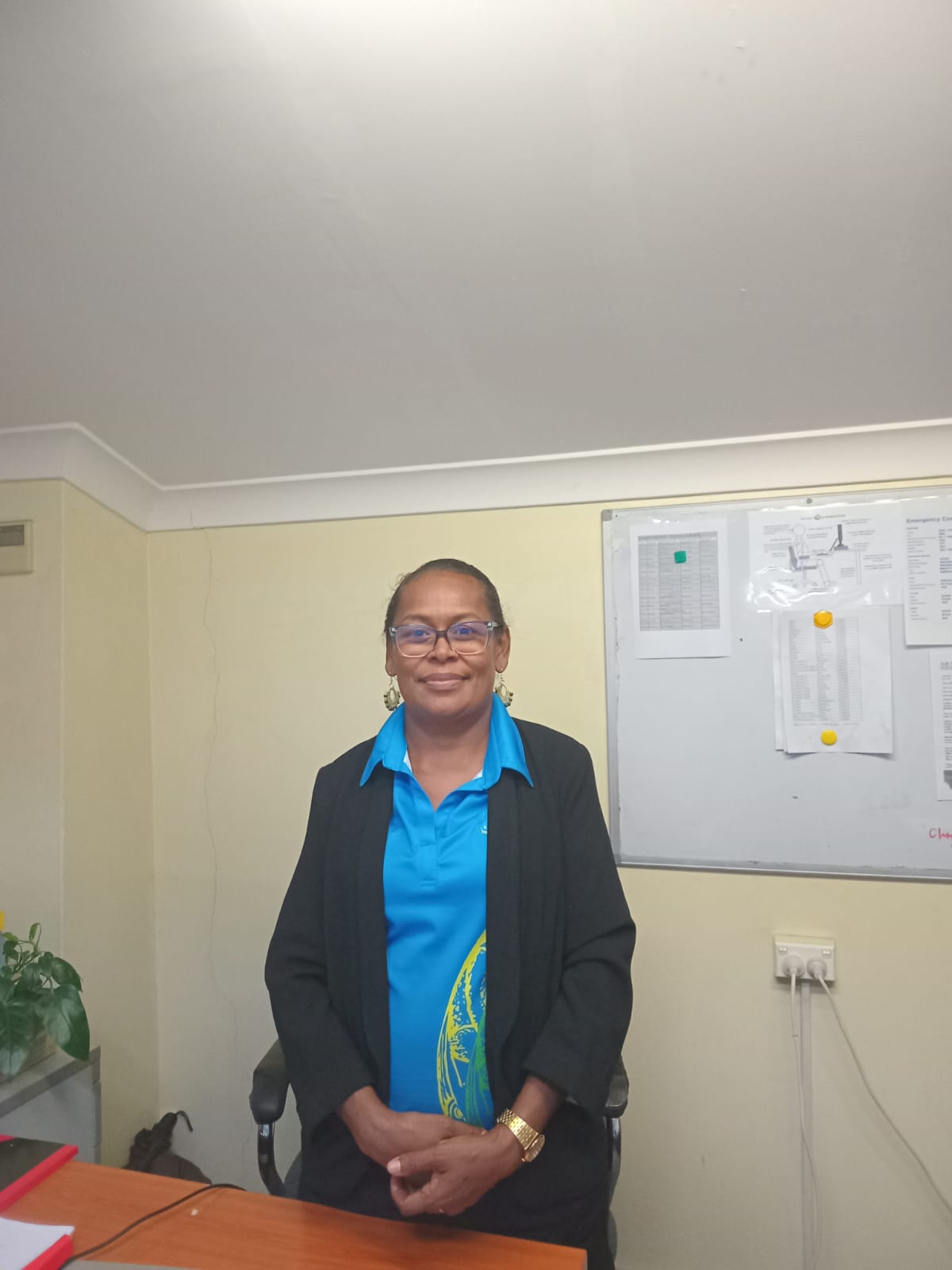 focusses on providing increased access to clean water and to bringing a customer focussed mindset to the work of that utility. She successfully completed Level 1 of the IWC’s Pathway Program in 2024 and then Level 2 in 2025.
“Before I joined Solomon Water, I was working for a fuel company, South Pacific Oil Limited, that was a subsidiary of the Solomon Islands National Provident Fund. What really mattered to me there was that the dividends went back to the people, to members of the Provident Fund.”
“That concept of working for an organisation that gives back to the community stayed with me. So when I saw the opportunity to work at Solomon Water, it immediately resonated. Water is an essential need, far more than fuel, and working in the water sector felt like an even deeper and more impactful way of serving people.”
“I joined Solomon Water in 2018 as a Customer Services Coordinator. At that time, customer services sat under finance, but even then I could see how important customer engagement and service were to the organisation’s future.”
“Access to water in the Solomon Islands is very different across communities. Even in Honiara, infrastructure isn’t always reliable. Working for an organisation that provides such a critical service to its people — especially for women, children and people with special needs — gave me a real sense of purpose.”
“When Solomon Water introduced its five‑year Corporate Strategic Plan for 2024–2028, customer centricity became a major focus. That led to escalation of priority, focus and commitment, with customer services becoming its own division.”
“That’s when my role evolved into Manager Retail, leading the Customer Services Division and becoming part of the SW Executive and Leadership Team. Looking back, I see how passion, purpose, and timing all came together to shape my pathway into leadership.”
How has investing in leadership development impacted you and your work?
“Before leadership training, I honestly believed leadership was only for people at the top — people with titles, qualifications, or many years of experience. Through the Pathway leadership program, I learned that leadership is for anyone. It’s about influence, passion, and stepping forward to create change, not about your position.”
“The training really helped me develop self‑awareness and self‑leadership. I began reflecting more intentionally on my behaviour; waking up early, thinking about the decisions I made, and asking myself what I could do better.”
“I started actively seeking feedback from my team and colleagues. That helped me understand both my strengths and my weaknesses, where I should lean in, and where I needed to grow.”
“One big shift was confidence. Previously, I could communicate informally, but I struggled in professional settings. Leadership development helped me open up, challenge myself, and step into spaces where I felt uncomfortable but knew I needed to be.”
“Now, as part of the Executive and Leadership Team, I need to show up, speak up, contribute constructively, and engage across departments and with external stakeholders. The Leadership Pathway program training made that possible. It helped me realise that leadership is not about perfection. It’s about learning, growth, and being willing to lead yourself first.”
What are the most challenging aspects of leadership for you?
“One of the biggest challenges I face in leadership is managing change. Not everyone is comfortable with change, and resistance often comes from uncertainty or fear — especially around job security.”
“At Solomon Water, we are undergoing significant organisational change: becoming more customer‑focused, improving systems, and changing long‑standing processes. That affects multiple teams across the organisation.”
“As a leader, my responsibility is to walk people through that change — to explain what’s happening, why it’s necessary, and how it aligns with our vision, mission and values.”
“Communication is critical. I’ve learned to use storytelling to help people imagine what the future looks like. When people can see themselves in the change, resistance softens.”
“Change doesn’t happen overnight. It takes time, trust, and consistent communication. Leadership is about being present, inclusive, and patient throughout that process.”
“Leading change has taught me that empathy and clarity are just as important as strategy.”
What does the future look like in terms of your leadership practice and development?
“Even though I’m now part of the executive team, I don’t see leadership development as something that ends. It’s continuous learning. I’m always learning, through books, articles, conversations, and observing other leaders. Every experience adds something to my leadership practice.”
“Going forward, I want to focus more on strategic networking — building meaningful connections beyond Solomon Water, across government, donors, utilities and the wider water sector.”
“I see leadership as being adaptable and open. Not every lesson will apply, but you take what fits and use it in ways that serve your organisation and your people.”
“Leadership for me is about staying curious, staying connected, and continuing to grow for myself, my team, and the communities we serve.”
Closing Thoughts
“Leadership development gave me the confidence to step forward and believe that I belong in leadership spaces. If my story can help other women and young water professionals — especially in the Pacific — to push themselves, speak up, and discover what they’re capable of, then that’s incredibly meaningful.”
More information
If you want to learn more about leadership development then please read more about Water Leadership Program (if you are living in AU/NZ) or Pathway Program (if you are living and working in another country). Contact us on IWC_training@griffith.edu.au for the opportunity to talk through your aims and needs. We are always happy to partner and collaborate.