Search

World Toilet Day 2025: Field Insights from Vanuatu’s WASH Supply and Demand Study

Author: Dr Mark Love, Research Fellow (IWC)

This World Toilet Day, it’s worth remembering that for many Pacific Island families, sanitation is not just about comfort – it is about children’s health, learning, and future potential.

Over the past three decades, Vanuatu has made some real progress: Joint Monitoring Programme (JMP) data show improved sanitation coverage rising from around 28% in 1989/1998 to over 80% from 2006 onwards, peaking at nearly 89% in 2016 (WHO/UNICEF, 2021). The latest Vanuatu Multiple Indicator Cluster Survey (MICS 2023) reports that 63% of rural households and 90% of urban households now use improved sanitation facilities (Vanuatu Bureau of Statistics [VBoS], 2024). Yet rural areas still rely heavily on basic pits, with unimproved options such as open pits and pour/flush to open drains remaining common, and open defecation persisting amongst nearly 5% of rural households (VBoS, 2024). Regionally, this mirrors wider Pacific trends, where urban access is generally higher than rural, with both lagging behind global averages for safely managed services (UNICEF EAPRO, 2024).

The consequences are stark. An estimated 29% of children under five in Vanuatu are stunted, with higher rates in rural areas (VBoS, 2024, p. 184). UNICEF’s 2024 Situation Analysis identifies stunting as a major development challenge, strongly linked to inadequate sanitation and poor water quality (UNICEF Pacific Islands, 2024). The pathway is increasingly well understood – environmental enteric dysfunction (EED), caused by continual ingestion of faecal pathogens, damages intestinal villi, impairs nutrient absorption, and is now recognised as a key mechanism linking unsafe WASH environments to child stunting (Crane, Jones, & Berkley, 2015; Budge et al., 2019). In this context, sustained improvements to rural sanitation and hygiene are central to Vanuatu’s health and development agenda.

However, sustaining gains has proven far harder than building toilets. Stitt’s (2005) review of the UNICEF/Ministry of Health Rural Sanitation Program (1988–2001) in Tanna found that while latrine construction targets were often met, many facilities were soon underused, poorly maintained, and soon abandoned (cf. Lindstrom, 2018; Schoeffel, 1995). More than a decade later, Morrison’s (2016) evaluation of water and sanitation programs in Tanna told a similar story: access to “improved” sanitation almost doubled – from 21% at baseline to 43% at endline (Morrison, 2016, p. 72) – yet within 18 months nearly half of inspected latrines had damaged slabs or broken doors (Morrison, 2016, p. 74). Moreover, behavioural change lagged behind infrastructure gains, with some households continuing open defecation due to convenience, habit, or cultural preferences (Morrison, 2016, p. 76; cf. Lindstrom, 2018). Interviewees described new WASH systems as external projects – “belonging to World Vision” rather than the community (Morrison, 2016, p. 99) – weakening local ownership and long-term maintenance.

Against this backdrop, the International WaterCentre (IWC), Griffith University, is implementing a WASH Supply and Demand Study in Vanuatu for UNICEF, with a strong focus on sanitation and hygiene. The team also includes Associate Professor Robyn Roberts (Griffith Business School) and Cedric Paniel (Engineers Without Borders Australia). IWC’s Dr Mark Love recently completed 30 days of fieldwork in Vanuatu, interviewing hardware proprietors, plumbers, government and NGO representatives, and facilitating focus group discussions in five rural communities on Tanna, with further research planned in rainwater-dependent Emao Island early next year.

Early findings from Tanna reiterate that:

  • Sanitation remains a low priority
  • Awareness of ‘stunting’ is extremely low
  • The ongoing ‘build-neglect-rebuild’ cycle – fuelled by externally driven ‘projects’ –is delimiting community resilience and motivation
  • Where there is reliable water supply (and even sometimes when there isn’t) the clear preference is for pour-flush sanitation options over VIP toilets
  • Where community governance and collective action is strong, there is interest in improving sanitation across the whole community (rather than simply being a household responsibility)
  • Awareness and follow-up support and monitoring to communities is critical for sustained impact and uptake
  • Strengthened Area Councils were consistently identified as the optimal body for supporting improved sanitation and hygiene practices

This World Toilet Day, the message from the Pacific is clear: better toilets – and better management – are fundamental to breaking the cycle of poor sanitation and hygiene. However, the findings from past evaluations and our recent fieldwork underscore that infrastructure alone is not enough; without long-term support, strong supply chains, technical quality control, and genuine community ownership, sanitation gains in Vanuatu will remain fragile.
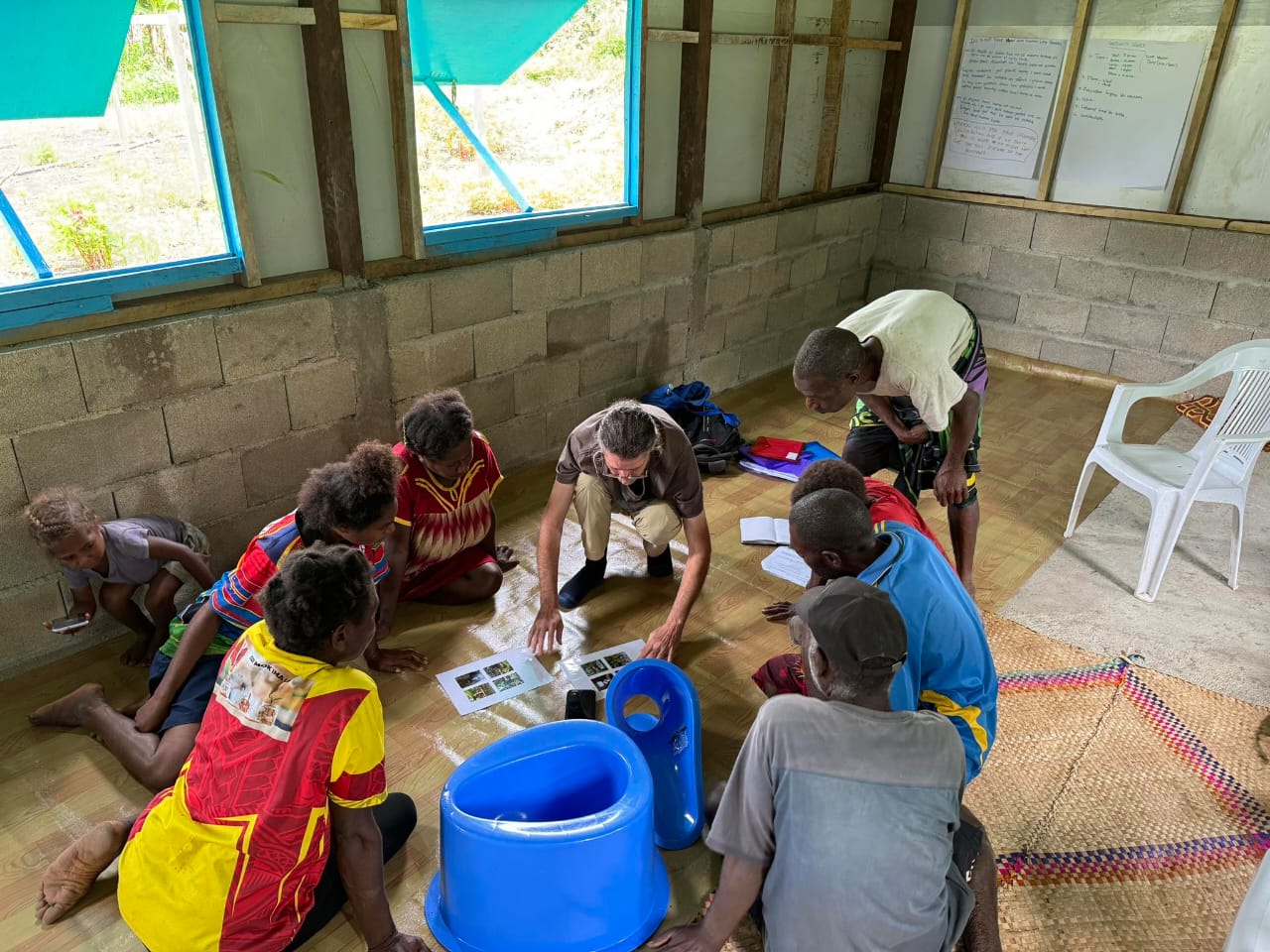
Mark Love with community representatives undertaking a Focus Group Discussion in Laol village (“Triple L community”), Central Tanna.

John Bill, AA Central Tanna demonstrating the SATO Tap (600) in Lamnatu village, Tanna.


References

Crane, R. J., Jones, K. D. J., & Berkley, J. A. (2015). Environmental enteric dysfunction: An overview. Food and Nutrition Bulletin, 36 (1_Suppl1): S76–S87. https://doi.org/10.1177/15648265150361S113

Lindstrom, L. (2018). Roads, water, toilets, light, and tourists on Tanna (Vanuatu). Paper presented at the European Society for Oceanists Conference, Cambridge, December 7–10, 2018.

Morrison, A. (2016). An evaluation of a World Vision water, sanitation, and hygiene (WASH) project in Tanna, Vanuatu (Master’s thesis). Massey University, Palmerston North, New Zealand.

Schoeffel, P. (1995). Cultural and institutional issues in the appraisal of projects in developing countries: South Pacific water resources. Project Appraisal, 10(3), 155–161. https://doi.org/10.1080/02688867.1995.9726989

Stitt, T. (2005). Evaluation of a rural sanitation program in Vanuatu with management recommendations. Journal of Rural and Tropical Public Health, 4, 1–9.

United Nations Children’s Fund (UNICEF) East Asia and Pacific Regional Office (UNICEF EAPRO), (2024). Pacific WASH JMP Snapshot 2023. WHO/UNICEF Joint Monitoring Programme for Water Supply, Sanitation and Hygiene.

United Nations Children’s Fund (UNICEF)  Pacific. (2024). The situation of children in Vanuatu. UNICEF Pacific.

Vanuatu Bureau of Statistics. 2024. Vanuatu Multiple Indicator Cluster Survey 2023, Survey Findings Report. Port Vila, Vanuatu: Vanuatu Bureau of Statistics.

WHO/UNICEF (2021). Joint Monitoring Programme for Water Supply, Sanitation and Hygiene (JMP). Progress on household drinking water, sanitation and hygiene 2000–2020: Five years into the SDGs (pp. 88–90). Geneva: WHO & UNICEF. https://washdata.org/


Climate Resilience Pathways: Water Security & WASH in Asia Pacific Conference

Climate Resilience Pathways: Water Security and WASH in Asia Pacific took place at the end of April in Bangkok, Thailand and Suva, Fiji. Funded by the Water for Women Fund and DFAT, the conference was centered around the theme: Resilient & inclusive water security & WASH as pathways for broader climate resilience, and, transformative and sustainable development.

The IWC team was proud to convene a total of seven sessions across Suva and Bangkok, discussing a wide-range of critical WASH themes, with each session highlighting unique insights and practical learnings.

Here are some key takeaways from each session:

Rosie Sanderson led “Harnessing diverse data on water resources and hazards for decision making”, which highlighted the importance of data-based evidence in decision-making and showcased not only the latest developments of emerging datasets, but also their application in water and WASH planning. A key takeaway for me was how clear it has become that water resources and WASH practitioners and policymakers no longer just think of diverse data such as spatial data as valuable in their work, they see it as vital. And there is so much going on in the Pacific to support that recognition.

Rosie also led “Sanitation in challenging urban environments – emerging practice and learning in the Pacific’s changing climate” that brought together diverse expertise and provided a deeper understanding of the approaches and factors influencing successful interventions to climate-resilient sanitation, such as policy support, community engagement and technological adaptability. A highlight was when a colleague from the Water Authority of Fiji commended the session on presenting both a realistic picture of the need as well as responses that are grounded in community preferences and strengthening the enabling environment, as well as technologically appropriate. He encouraged participants and practitioners to work in partnership with utilities and agencies like WAF to progress the important mix of sanitation systems required to service all citizens in cities across the Pacific, a point that was made by all presenters in the session.

Dr Mark Love facilitated the workshop “Decentralisation and rural water service delivery in the Pacific Island countries: exploring challenges, opportunities and pathways forward” where participants explored evidence-based strategies and worked collaboratively on developing actionable recommendations to enhance government and service delivery. A key takeaway from the workshop was the widespread recognition of shared challenges across Pacific nations, particularly siloed departments and poor data sharing, while Vanuatu’s decade of reforms stood out as a model that impressed many attendees.

Dr Regina Souter facilitated the session “WASH as a pillar of resilience of Pacific people” that progressed discussions on the links between access and use of safe WASH to the resilience of people, and how we can better communicate why WASH is essential for broader resilience. A key learning:

Dr Piet Filet guided the session “Capacity development to safeguard water assets and communities from floods” where we heard from partners from Fiji and Australia to showcase a knowledge exchange on flood mitigation as a capacity building program and identified the skills needed to respond to the impacts arising from climate change on local water management. In this workshop it was seen that crafting the focus of the topics to be addressed requires a case-by-case review of local challenges, community needs and organizational capacity.  Next the way that the capacity development activities are offered can best start with a diverse mix of options being considered. Then, based on the organizational timing needs, “personality” of the participants and available resources a method or series of activities can be selected that engages the group and allows them to connect knowledge with practice.

IWC Adjunct A/Prof Bronwyn Powell led the workshop “Inclusive leadership for climate resilient water management” in the Bangkok hub. The session built on participants’ understanding of how inclusive leadership practices contribute to addressing holistic and systems-wide changes needed for climate resilient water security and WASH. The session drew on theory as well as case studies from SNV Bhutan and Alluvium’s work in Laos and Fiji. Participants noted the importance of active listening and reflection for inclusive leadership for transformative change.

Suliasi Batikawai and Dr Sarah Pene (USP) co-led the session “Scaling Up Water Safety Planning (WSP) Practices for Climate-Resilient Water Security in the Pacific” that shared WSP practices across the Pacific, identified strengths, challenges and scaling needs, and explored actionable steps to enhance WSP implementation and establish a Pacific WSP Community of Practice. A highlight from the session was the quality and depth of the presentations, as each speaker shared practical insights, successes, and lessons learned that could be replicated in other Pacific Island Countries. This sparked an engaging Q&A session coupled with a healthy discussion, which was especially valuable for countries and stakeholders who are just beginning to consider WSP, or those looking to strengthen their current efforts by learning from peers. It was a solid learning and exchange moment for everyone in the room.


Policy versus Practice: Examining Decentralisation and rural water services in Fiji, Solomon Islands and Vanuatu

Author: Dr Mark Love, Research Fellow

Across the Pacific, governments are embracing decentralisation as a guiding principle for public service reform, including in the water, sanitation and hygiene (WASH) sector. Decentralisation is relatively strongly cemented in Fiji and Vanuatu and advancing in Solomon Islands. While the notion of decentralisation holds the promise of improved service delivery, especially in rural and remote communities, the reality of implementation often falls short. In small island developing states like Fiji, Solomon Islands and Vanuatu, decentralisation is more evident in policy than in practice, and its impacts on rural water service delivery remain uneven. Recognising the gaps between aspiration and reality, researchers from the Pacific Community Water Management Plus (PaCWaM+) applied research program – led by the International WaterCentre, Griffith University, in partnership with colleagues from The University of the South Pacific (Fiji and Vanuatu) and Solomon Islands National University, and supported by the Australian Government’s Water for Women Fund – and undertook formative research in these three countries to better understand the strengths, opportunities, and challenges associated with decentralisation in the rural water sector. The results have just been published in three stand-alone reports (link).

Across all three countries, community water management (CWM) remains the dominant model, even as evidence accumulates that it struggles to deliver long-term, reliable services. The emergence of a “community water management plus” (CWM+) model – characterised by greater professionalisation, diversified delivery approaches and post-construction support – is gaining attention globally. But in the Pacific, where logistical, financial and human resource constraints remain acute, decentralisation offers both a potential mechanism for strengthening support and a test of government capacity. Understanding how decentralisation is being operationalised, and where it is working well and where it can be improved, was the overriding impetus for this study.

The research employed a mixed-methods approach, with a total of 114 semi-structured interviews conducted across the three countries at national, provincial and community levels. Participants included national government officials, provincial authorities, ward and village leaders, and water committee members. In Fiji, interviews were carried out across five provinces; in Solomon Islands, interviews spanned Western and Isabel provinces and Honiara; and in Vanuatu, interviews were conducted across four provinces. In each country, results were presented to key sector actors at stakeholder validation workshops. The research team developed a shared framework comprising six “elements” or “building blocks” of effective decentralisation for rural water service delivery: (i) policy and regulatory frameworks, (ii) budgeting, resources and (material) resources (iii) information and knowledge sharing, (iv) monitoring, evaluation and learning (MEL), (v) coordination and harmonisation, and (vi) human resources and capacity development. This framework guided the analysis of institutional strengths, challenges, and opportunities in each country.

In Fiji, decentralisation of the rural water sector is supported by a relatively robust policy foundation, including the 2021 Rural Water and Sanitation Policy. This policy mandates that provincial administrators, particularly Roko Tui and Assistant Roko Tui officers, monitor and support community WASH efforts. However, the research found considerable gaps in awareness and implementation with more than 60% of subnational respondents unaware of the policy, and evidence of respondent confusion about what monitoring, as stipulated on the policy, entails. While Fiji fares better than its neighbours in terms of available resources and institutional capacity, sector fragmentation remains a challenge. Roles are not clearly delineated between the Department of Water and Sewerage and the Water Authority of Fiji, and coordination with other line ministries remains inconsistent. On the ground, water committees receive minimal post-construction support, and although standardised training for committees has recently been piloted, its rollout currently remains limited. Sector-wide MEL systems are underdeveloped, and harmonisation across partners, including NGOs, is ad hoc at best. Despite these limitations, Fiji is well placed to animate a more decentralised and resilient water service delivery system if institutional alignment and subnational capacity are strengthened.

Solomon Islands presents a more fragile picture. Despite repeated references to decentralisation in policy documents, there is little evidence of substantive transfer of power or resources to provincial or local authorities. Interviews revealed a widespread perception that decentralisation has not moved beyond rhetoric. More than half of rural water systems in Solomon Islands fail before reaching their designed lifespan, and water service access has declined over the past two decades. The governance and institutional environment remains centralised, with limited clarity around roles and responsibilities at the subnational level. The national RWASH policy, while progressive on paper including commitments to social inclusion and devolving implementation to “service delivery partners” (SDPs), was described by respondents as overly ambitious and poorly resourced. Provincial governments, while increasingly important in planning and oversight, lack the tools, training, and finances to support communities in maintaining water systems. There is no routine post-construction support, and MEL processes are sparse. Human resource constraints are severe, with burnout and overstretching of key officers cited frequently. Reporting processes are hindered by ad hoc data collection and manual data entry, whilst inactive oversight committees and non-functional stakeholder groups delimit effective sector coordination. Nevertheless, the research found promising avenues to potentially engage Ward Development Committees and Ward Support Officers in planning and coordination, which could provide a foundation for furthering decentralisation aspirations.

Vanuatu represents perhaps the most ambitious of the three cases in terms of policy and structural reform. Decentralisation is a constitutional principle in Vanuatu, and recent years have seen a notable devolution of planning and budget responsibilities to Provinces under the Department of Local Authorities. In the water sector, the Department of Water Resources has initiated a decentralised service delivery framework that integrates national, provincial, and area-level responsibilities. The reforms have provided support for water committee bylaws, with some evidence that they are enforceable and effective. Additionally, the DoWR outsources community training (e.g., water committee training and water safety planning) to SDPs, which – according to respondents – has expanded program reach but introduced quality control challenges. However, despite progress, the reform process remains incomplete. While area councils are now tasked with collating WASH needs and monitoring community water safety plans, they lack consistent funding and adequate technical support. Provincial-level WASH officers are highly motivated but overstretched. Information-sharing systems are underdeveloped. MEL remains largely donor-driven, and monitoring of community water committees is inconsistent and weak in practice. Despite these gaps, Vanuatu stands out for its coherent vision of decentralised rural water service delivery and the structural reforms underway to support it. Ongoing efforts to integrate traditional governance structures and local knowledge systems into water planning also represent a strength that is largely absent in the other case studies.

Taken together, the research highlights both the promise and the peril of decentralisation and rural water service delivery in the Pacific context. Across all three countries, decentralisation has not yet delivered on its potential to strengthen rural water outcomes. In practice, what exists is a mix of partial devolution, deconcentration, and delegation, rather than full political or fiscal decentralisation. The result is a system where responsibilities are passed down without adequate resourcing or clarity, leaving subnational actors in a state of limbo. The community water management model, while still dominant, is under strain. Inadequate training, weak monitoring, and minimal follow-up support mean that even where policies exist, they often have little impact on the ground.

Yet there are also reasons for optimism. All three countries have active policies supporting decentralisation and WASH, and there is a growing awareness among stakeholders of the need to professionalise rural service delivery. The introduction of standardised water committee training in Fiji, the emerging provincial sector coordination in Vanuatu, and the introduction of ward structures in Solomon Islands, are all examples of potential building blocks for stronger systems. What is needed now is greater alignment between national policy and subnational practice – backed by real investment in human and financial resources, institutional capacity, and adaptive learning systems. In the near term, there is an urgent need to shift the focus from delivering individual services to strengthening the systems that underpin them. Only by investing in these foundational capacities can decentralisation move beyond rhetoric and begin to fulfil its promise of safe, reliable, and inclusive water services for all Pacific communities.

Strengthening Inclusive and Climate-Resilient Urban WASH in Melanesia

Author: Rosie Sanderson, Project Officer

Over the past three years, IWC has had the pleasure of working with a diverse multi-institutional team on a 2-phase research project exploring Inclusive and climate-resilient urban WASH in Melanesian informal settlements. The research was led by a partnership of International WaterCentre at Griffith University and The University of the South Pacific in Fiji and Vanuatu, with professionals and academics from the University of Papua New Guinea, WaterAid PNG, and UACS Consulting and supported by the Australian Government’s Water for Women Fund. Together, we aimed to strengthen WASH and interrelated governance systems – particularly, planning support systems such as spatial models, decision-support-schemas, local knowledge and community participation – used to make decisions about which WASH service delivery models (SDMs) will be climate resilient, socially inclusive and suited to the local context.

The overarching research question was “How can the climate resilience and social inclusion of WASH services in urban informal settlements be strengthened with locally adapted climate science and knowledge, planning support systems and champions?”.

This study provides regionally contextualised evidence about the kinds of processes, tools, and systems that could be explored within different urban contexts in Fiji, Vanuatu, and Papua New Guinea (PNG). We used various methods, conducting semi-quantitative household surveys and qualitative social research activities, to understand existing WASH services and preferences, urban planning approaches, and the existing political economy in terms of the provision of urban WASH. Alongside these approaches, we sought to synthesise diverse datasets, including open-sourced, remotely sensed spatial data, participatory GIS mapping information, and water quality monitoring datasets, to form an overall picture of the hazards on a local and regional level. In this way, we sought to use a strengths-based approach to see what works now and what needs to change to improve the resilience of systems.

Amongst the many outcomes from the research, there were three key insights for policymakers and practitioners:

– Engagement needs to be strengthened between urban informal settlement communities, support organisations and water and sanitation service providers, including utilities. Within utilities, there may be a benefit in thinking of urban informal settlement residents as a third kind of customer, neither rural nor urban in the traditional sense, but a customer type that pays bills and assists with onsite water management in their communities, with appropriate advice, support and empowerment. In this way, a utility might best be able to develop service options to meet the needs of these customers.

– The development of climate-resilient water and sanitation services must be tailored to the realities of urban informal settlements. Improving the safety and reliability of water service will require not only improvements to on-site water infrastructure, but also specific attention to reducing local hazards, in particular inadequate waste containment of sanitation facilities, and to mitigating the impacts of climate-related hazards, in particular flooding, which are exacerbating the effects of local hazards and inadequate water infrastructure.

– Urban planning, climate planning, and planning for water and sanitation services must be better integrated in Melanesia urban settings. This integration must be supported by planning support systems that take advantage of the latest technologies, datasets, and methods of integrating diverse information. Urban settlements can be difficult to monitor in real time, especially in terms of growth, and tools such as spatial systems can overcome some of those challenges.

Our insights from this research have been collated into several research outputs designed for different audiences, including journal articles, policy briefs and technical briefs. All outputs are available on our project webpage here: https://watercentre.org/projects/planning-for-climate-resilient-water-sanitation-and-hygiene-in-urban-settlements-in-melanesia/

As the project concludes, we foremost wish to thank the residents of informal settlements who generously shared their time, knowledge, and experiences with our researchers. Without their generosity and partnership, this research would not have been possible. Many individuals and organisations, including the Fijian Government, the Vanuatu Government, and others, provided valuable information and insights. We thank staff from Fiji Roads Authority, Ministry of Health and Medical Services – Environmental Health Department, Department of Water and Sewerage, Suva City Council, Water Authority of Fiji, Ministry of Lands and Mineral Resources, Port Vila Municipal Council, Ministry of Health, Department of Urban Affairs and Planning, Ministry of Lands and Natural Resources, Public Works Department, Water PNG, Project Management Unit PNG, and UNICEF for participating in project meetings and stakeholder workshops and interviews. We also acknowledge the contributions of our outstanding research assistance team at USP in Fiji and Vanuatu. Finally, the International WaterCentre team is very grateful to our long-term partners at USP, UACS, and UPNG for the many years of shared investigations, friendships, and envisioning a different world with us.

Addressing piped water problems in urban settlements through Participatory Planning

Written by Dr Regina Souter

In August 2024, the urban WASH research team came together in Suva, Fiji, to undertake action research on piped water supply in urban informal settlements. Until recently, there has been an assumption that residents or urban settlements that access their drinking water from a piped water supply from the utility, were accessing a safely managed water service (using the definitions of the SDG6.1 indicator). However our urban WASH research project revealed that although most residents are indeed accessing piped utility water, these aren’t necessarily providing safe and reliable water to the households using them. Local hazards – some related to climate change – are causing damage to the pipes that convey water from connection meters on the settlement boundary, to the tap.

Drs. Regina Souter (International WaterCentre, Griffith University) and Ed Morgan (Griffith University) joined forces in Suva, Fiji, with our research partner USP-Fiji, led by Camari Koto and supported by Grace Ratidara and Viliame Salusalu. Although the water utility regularly engages with its customers, those that live in urban settlements have different engagement needs to typical urban water customers. We used action research to explore the suitability of various Participatory Planning approaches to support engagement that is more two-way, to jointly solve local piped water supply problems.

An initial, day-long workshop was held off-site, at USP, and was an important step in bringing together the participants. These included residents from the target settlement (Muslim League), and a range of actors with varying levels of responsibility for WASH: Water Authority of Fiji, Department of Water and Sewerage, Ministry of Health and Medical Services, Dept of Department of Town & Country Planning and Suva City Council. This workshop explore different Participatory Planning approaches, such as Scenario Planning, which we tested out on fictional settlements hat were representative of settlements in Suva. One task common to most of the approaches we discussed, was taking the time to explore how existing or possible alternative water service delivery models impact people’s lives. A number of government/utility participants commented that this was something not considered or discussed very much, because they assume the services they are providing have only positive impacts. This workshop day, focused on life-like, but not the actual, problems proved important for developing a rapport between participants, and giving residents a more equal voice in discussing the impacts and possible solutions to water problems.

To test our participatory planning in a real situation, a second workshop was hosted by the Muslim League settlement, with the same participants. Residents led stakeholders on a ‘community transect (inspired by Participatory Rural Appraisal methods) to build a collective understanding of the nature of the water supply problems and the main causes. Following the transect discussion of the problems, small groups identified a long list of solutions that residents could consider implementing, some with support from local actors such as the utility, but all with community-led actions. Time was given to discuss the details of such solutions, including the strengths and weaknesses, to ensure the community were well-informed about the options. The meeting closed with community leaders describing deep appreciation for the opportunity to raise awareness of the problems and explore in more detail the causes and possible solutions with a diverse mix of technical and local/onsite knowledge.

As an action research activity, we want to understand the strengths and weaknesses of adoption of such Participatory Planning approaches, and are looking forward to supporting and assessing progress on what is a critical issue – access to safe, reliable and resilient water supplies for these overlooked urban populations.


Learn More

The Project – Planning for climate-resilient water, sanitation, and hygiene in urban settlements in Melanesia –

Postcards from the field – Port Vila

Pacific Researcher Exchange – from Suva to Port Villa

Pacific Islands Regional Knowledge and Learning Exchange: Suva, Fiji, 6 – 10 November 2023

A multi-stakeholder approach to address water and sanitation challenges in underserved settlements in PNG

Did you know? IWC research prioritises producing practical and usable tools

Faith-based Organisations and WASH in Solomon Islands: A missing link?

Written by Dr Mark Love


Research conducted as part of PaCWaM+1 sought to answer the question: Do churches have a role to play in supporting community-based water management in the Pacific and, if so, what might this look like? Based on formative research in Solomon Islands and desk-top reviews of other Pacific Island Countries (PICs), the answer was “Yes, they do” and various options of what this might look like were identified.

With the support of the Australian Government’s Water for Women Fund, the International WaterCentre (IWC), Griffith University and Solomon Islands National University (SINU) have been undertaking action research with the Anglican Church of Melanesia (ACOM), United Church (UC), South Sea Evangelical Church (SSES) and Seventh Day Adventist (SDA) churches in the Provinces of Isabel and Western.

Last year, IWC / SINU conducted workshops with 26 leaders from different church denominations in Solomon Islands, supported by senior environmental health inspectors from the relevant Provincial Environmental Health Division/RWASH. During the workshops, participants developed Action Plans and committed to undertaking numerous actions to improve community water management in their respective communities.

In June and July this year, Collin Benjamin and Sheilla Funubo, under the guidance of Dr Hugo Bugoro and Nixon Panda (SINU), completed monitoring of these Action Plans. The results are promising, supporting “proof of concept”.  Highlights include:

  • Conducting community awareness about water management (sometimes using the “Water is Everyone’s Business: video)
  • Re-establishing water committees
  • Introducing or re-vitalising water fees
  • Conducting fundraising for water system improvement
  • Improving rubbish collection and disposal in the village
  • Cleaning tap-stands and dams more frequently
  • Undertaking repairs
  • Priests’ integrating water stewardship messages into sermons.

In terms of meeting the specific targets as laid out in each of the Action Plans, most communities were sitting on between 40-70% completion rate.

Before, you would see empty plastic bottles and detergent containers lying around the stand taps. Now, you hardly see them” (Titiro, Isabel)

The Oceanic region is known as “the most solidly Christian part of the world,” with over 90% of Pacific Islanders identifying as Christian. Churches and church-related organizations (faith-based organizations or FBOs) play a crucial role in the region’s history, culture, and politics. In rural Solomon Islands, church leaders, along with customary institutions like chiefs and cultural norms, shape the patterns of daily life. As George Hoa’au has noted, “The church has a very special kind of respect within villages; people don’t see the member of parliament every day, they see the pastor and priest every day.” Church-related groups are typically the most active institutions at the village level, providing many of the services typically associated with the state in Western contexts.

Some of the church leaders involved in the workshops undertook actions in all the communities they oversee (up to 6 villages), demonstrating the institutional reach and scalability of the church.

Churches are not a magic bullet, but they are an active, influential and overlooked WASH ally in the Pacific region. The early results of this research suggest that FBOs constitute an important “plus” that can help support the community-based water model at the rural level.  Government and other actors still have an important role to play but whilst the community-water management model remains the dominant approach in the region churches  can, and should, be engaged with more by development partners and governments seeking to improve rural WASH in PICs

Fig. 1. Tap-stand, Baolo village, Isabel


Fig. 2. Sheilla Funubo interviews a member of the Mothers Union as part of the monitoring research in Buala village, Isabel

Learn more about this project

Pacific Community Water Management Plus (PaCWaM+)

This International WaterCentre led research project explored how CSOs and governments can better enable rural community water management in the Pacific to improve SDG6 outcomes, using community water management plus practices.

This project is funded by the Australian Government’s Water for Women Fund.


Our Research Partners for this project include:  Griffith University, Plan International Australia, Live and Learn Solomon Islands, Habitat for Humanity Australia, University of South Pacific and Solomon Islands National University

“Wai Tamata” (Water for Peace): World Water Day in Vanuatu

On Friday, 22nd March, Dr Mark Love (International WaterCentre) and Heather Molitambe (The University of the South Pacific – Vanuatu), were privileged to attend the “Commemoration of World Water Day” in Saratamata, Ambae Island, Penama Province, Vanuatu.

Mark and Heather are working on “PacWaM+ 2: Supporting decentralised rural water supply in Pacific Islands”, a research project being undertaken in Vanuatu, Solomon Islands and Fiji, supported by the Australian Government, Department of Foreign Affairs and Trade, Water for Women Fund.  Mark and Heather were in Ambae and Pentecost wrapping -up formative research on the status of rural water service delivery decentralisation in Vanuatu, and interviewing members of a remarkable water committee in Latano, central-north Pentecost, for a video for the Department of Water Resources on strong water committees.

World Water Day – a United Nations observance day since 1993 – seeks to focus attention on the global water crisis. This year’s theme was “Water for Peace” and draws attention to the fact that water can create both peace and conflict – when water is scarce or polluted, or when people have limited, no, and/or unequal access to water, tensions can rise.  As climate change impacts increase, and populations grow, there is an urgent need to unite around protecting and conserving our most precious resource – water.

The Water Day celebrations were led by the Department of Water and Resources (DoWR), in collaboration with the National Disaster Management Office (NDMO) and Vanuatu Department of Meteorology and Geo-Hazards (World Meteorological Organisation Day is 23 of March).  Numerous dignitaries from the Provincial and national government attended for the day, specifically Hon. MP Rick Techamako Mahe (Minister of Internal Affairs), Johnstil Tari Qwuetu (Minister of Health), (acting) Director General (DG) Lands, Erickson Sammy (former Director of DoWR) and (acting) Director DoWR, Brooks Rakau.

In continuity with this year’s World Water Day, the message was translated as Wai tamata (wai = water, tamata = peace/unity, in many of the 130+ vernacular languages spoken in Vanuatu).  Following numerous speeches – including a fascinating talk by Chief Elison Reveala on the source and spiritual significance of water on nearby Maewo island (renowned for having the highest rainfall in the country and literally hundreds of spectacular waterfalls) – there was a ground-breaking ceremony for the new DoWR office building as well as the rehabilitation and upgrade of the Saratamat Water Supply system.   The new, extended water supply system will bring piped, safe groundwater to over 1000 people currently without access to safe and reliable.

The DoWR, who were also running their annual retreat in Saratamat in week leading up to World Water Day – facilitated negotiations and eventual agreement between over ten customary land groups, some of which have contested claims over the ground where the pipes will be located.  Land disputes are one of the most substantive and intractable issues impinging rural development in many parts of the country (from water and energy projects to airports and provincial government buildings).  In the spirit of Wai Tamata, key members of the DoWR successfully negotiated with the leaders of the customary land holding groups, and on Wai Tamata Day publicly singed an Access Agreement alongside Hon. Minister Rick Tchamakao Mahe, DG Erickson and all the key customary landowners, who reported that they “were happy for the project extension and the benefits it will bring our people”.


Learn more about this project

Pacific Community Water Management Plus (PaCWaM+)

A multi-stakeholder approach to address water and sanitation challenges in underserved settlements in PNG

From June 19th to June 23rd, 2023, Dr. Benny Rousso, representing the International Water Centre (IWC), visited Port Moresby to advance the Climate-resilient and inclusive WASH project in unserved urban settlements in the Melanesian Pacific region. The project, funded by the Water for Women fund (Australian Department of Foreign Affairs), aims to understand different water and sanitation delivery models’ effectiveness in terms of climate resilience and inclusivity in underserved settlements.

During the visit, Dr. Rousso met with partners from the University of Papua New Guinea (UPNG), Dr. Linus Digm’Rina and Mt. Elias Mamosha, and Papua New Guinea WaterAid, represented by Mr. Donald Kanini. The discussions centered around mapping and selecting relevant settlements and stakeholders in Port Moresby, as well as strategies for data collection within the communities.

Additionally, the team conducted a site visit to Pari, a traditional indigenous settlement where water and sanitation services have been insufficiently planned due to customary law practices. To address this issue, WaterAid will trial a water delivery model involving the establishment of water kiosks, supported by local leaders to regulate water usage. With most of the necessary infrastructure already in place, the trial will commence once the local water utility, WaterPNG, begins supplying water to the kiosks within Pari.

The activities undertaken during the visit are essential in understanding the unique circumstances of each settlement in Port Moresby. This knowledge will inform tailored strategies, interventions, and resource allocation for data collection, ensuring the project’s effectiveness.

The collaboration between the IWC, UPNG, and WaterAid reflects a multi-stakeholder approach to address water and sanitation challenges in underserved settlements. By leveraging local knowledge, academic expertise, and community engagement, the project aims to develop sustainable and inclusive solutions that can be replicated across the Melanesian Pacific region. Additionally, the project seeks to build local capacity and promote decolonization practices.

Learn more about this project

Planning for climate-resilient water, sanitation, and hygiene in urban settlements in Melanesia

Did you know? IWC research prioritises producing practical and usable tools

At IWC, our approach to research has always been collaborative, transdisciplinary, and based on a partnerships. We focus on producing outputs that are relevant to the governments and practitioners with whom we work. While we also publish our research in top-tier academic journals, we work hard to ensure that research doesn’t get buried within the academic community but is accessible and in formats that can be easily used, shared, replicated, and applied in practical ways in the water, sanitation and hygiene (WASH) sector.  

The end of 2022 marks a significant milestone for our IWC applied research team, with three of our largest research programmes, funded under the Department of Foreign Affairs and Trade’s flagship WASH program the Water for Women fund, are reached completion. These projects span from Indonesia to Fiji and all countries in between, and with a collection of academic partners that include the University of Udayana (UU, Indonesia), Institute of Technology Bandung (ITB, Indonesia), University of the South Pacific (Fiji and Vanuatu), and the Solomon Islands National University (Solomon Islands). They also involve numerous partnerships with government departments, private sector actors, non-government organisations, and rural and urban communities. The evidence, knowledge products and tools generated by these project have reached numerous academic and non-academic audiences. 

So, if you have a current focus on rural water safety planning, engaging corporate actors in WASH, or sanitation for young children, we have a tool for you!  

Inclusive WASH at Work Guidelines   

After a detailed formative research stage, the IWC, UU and ITB project team worked together with hotels, resorts, all levels of government and women’s and disabled persons’ organisations to co-develop guidelines. Multiple sets of Guidelines have been developed for different audiences including:  

  1. Hotels / resorts: to self-assess their provision of Inclusive WASH in workplaces, and their contributions to destination-wide WASH and water stewardship outcomes 
  1. Government: to outline their roles and responsibilities in ensuring inclusive WASH for all people within tourism destination 
  1. Community: to encourage adoption of hygienic WASH practices and engage with tourism planning and development  

Tools were produced in local language as relevant, with Bahasa Indonesia versions and community education posters produced in Fijian, and are now housed not only on IWC’s website, but also on local government and tourism association websites.  

Community Water Management Tools  

An important approach to water services, particularly in the Asia Pacific region, has been the community water management (CWM) model. However, globally evidence suggests that most communities struggle to manage water services, without any support, and to achieve sustainable, resilient and inclusive ones. The community water management plus (CWM+) model is considered a viable improvement to the basic CWM model (Baumann, 2006; Hutchings et al., 2015, 2017). Following the establishment of any necessary water infrastructure and community water management, the CWM+ model includes long-term support from external organisations and / or people in a way that augments CWM.   

Previous CWM+ research has identified a range of generic intrinsic and extrinsic factors that influence ‘good’ CWM outcomes (Hutchings et al., 2015; World Bank, 2017). However, the unique context of Pacific Island Countries (PICs) required rigorous place-based evidence about which approaches are most feasible and effective in the region. The Pacific Community Water Management Plus (PaCWaM+) research sought to identify what the ‘plus’ factors might look like in two PICs, Fiji and Solomon Islands, by asking what type of support is needed by communities, and how that support might be achieved. Later stages of the research focused on further exploring – and where possible piloting – some potential supporting approaches and tools, which are documented in our PACWAM+ compendium. 

Child Faeces Management  

Community-led total sanitation (CLTS) is an approach commonly used to address and reduce open defecation across the Pacific, including as part of the rural sanitation policy in the Solomon Islands. However, here, as in many CLTS programs, the management of sanitation for young children and infants (less than 5 years old) is a gap. We addressed this gap by considering the behaviour change challenge of motivating the parents of young children to choose safe and gender-equitable methods of child-faeces management in rural contexts. We found the strongest motivator for parents tends to be related to nurturing and caring for their children, and so we used this to design and pilot several activities including a role play and motivational video that can be used by CLTS implementers. In a controlled trial, we found the tools and activities to promote an increase in understanding and desire to chose safe and equitable options, and that implementers could see the relevance and applicability of the tools to their existing program of works. The toolkit is freely available here, including this video which uses real-life testimonials from parents in rural Solomon Islands to describe why they practice safe CFM with their children. 


Blended Finance for WASH: what is it and why do we need it?

If we are serious in our efforts to meet the sustainable development goal 6 of access to safe water supply, sanitation and hygiene (WASH) for everyone, especially in the face of climate change, there will need to be significantly more investments to overcome the substantial gap between the public funds that are available, and the finance needed to tackle the challenges communities are facing due to a changing climate.

This is the challenge that the International Water Centre (IWC), in partnership with Lean Finance and with the support of the Department of Foreign Affairs and Trade (DFAT), have been grappling with over the past year. Recent outputs from their research points to possible solutions through the more sophisticated approaches in blended finance.

“There is no doubt that climate change increases failure rates in existing infrastructure, which will require either new systems or retrofitting of the old systems,” says Dr Regina Souter from the IWC.

“In a recent report, Blueprint: financing a future of safe water, sanitation and hygiene for all, published by WaterAid in May 2021, the cost to deliver universal climate-resilient WASH will reach 14 trillion USD by 2030,” Regina said.

“We wanted to know whether blended finance could work to benefit WASH and in what situations. What we found was that you need a strong enabling system, and then the investors will follow. Blended finance will not resolve all the financing issues, but it does offer a more holistic approach to finding capital from non-traditional sources.”


According to Oksana Tkachenko, Founder of Lean Finance, organisations need to make the best use of existing assets and resources, minimise their future needs and investigate additional revenue opportunities that could be generated by taxes and tariffs, before trying to harness additional sources of finance as part of the money transfers.

“We also need to consider the way existing finances are used and whether there are smarter ways to increase efficiencies and effectiveness of WASH services, such as through nature-based solutions, innovation, and circular economy principles. This can increase the longevity and resilience of WASH services, reducing the need and reliance on additional sources of capital.”

Blended finance and WASH – a necessary opportunity

Blended finance is a partnership of various financial “actors”, working together to combine different sources of capital with innovative financing structures. It provides an opportunity for the public sector to leverage their own funds by accessing private funds. They can do this by providing publicly sourced capital that has a high tolerance to financial risk (e.g. grant, subsidy, guarantee, or first-loss capital) so that private (or other) investors’ financial returns are more “protected”, and thus private sector more willing to participate.

The ‘blending’ can manifest in many ways. For example, the blending of capital to create an investment pool, the blending of financial tools within an investment pool, the blending of portfolios of funds for deployment by a sector or a region, or blending of different types of activities and enterprises, or of different types of organisations and functions.

To inform public audiences about the potential positive impacts and challenges of blended finance, the team generated some evidence by performing a case study assessment of past examples. The assessment focused on the financial arrangements of such initiatives and explored their potential for positive development and social impacts, and their scalability or ability to be repurposed.


Lessons from existing innovative financing of WASH

The five case studies selected involved WASH projects that were initiated on the basis that public funds alone would not be sufficient to drive systemic change in the sector and to realise WASH development impacts at scale. Among the five projects, two were focused on sanitation services, while the others sought broader opportunities across the water sector. All initiatives were executed in low- and middle-income countries, including countries in the Indo-Pacific region. The case studies feature some form of blending (2 cases), leveraging (2 cases), or linking (1 case) public and private capital to expand and offer WASH products and services to low income, marginalised and/or unserved populations, and to close affordability and financing gaps.

The case study report assesses the following WASH initiatives

  1. WaterEquity Fund II: a $US 50 million fund initiated by private investors, to deploy funds as loans to local microfinance institutions (MFIs) in India, Indonesia, and Cambodia. These MFIs, in turn, on-lend loans to households, who then purchase WASH products and services.
  2. Cambodia Rural Sanitation Development Impact Bond: a results-based arrangement for scaling-up rural sanitation in Cambodia initiated by the UK-based Stone Family Foundation (SFF), involving USAID as the outcome-payer and iDE as the WASH service provider.
  3. Kenya Innovative Finance Facility for Water (KIFFWA): set up with funding support from the Dutch Government and a budget of $US 19 million, to fund the development stage of water and sanitation projects and aims to support private sector developers in bringing the projects to financial close.
  4. Bangladesh Output-Based Aid (OBA) Sanitation Microfinance Project: a US$ 550 million WASH program, funded by the World Bank, Asian Infrastructure Investment Bank and the Government of Bangladesh to build a market of sanitation products and services and increase the affordability of WASH investments by households, changing consumer behaviours.
  5. Azure Source Capital and Catholic Relief Services: a $10m facility executed by impact investment fund manager, Total Impact Capital, with the Catholic Relief Services as a technical service provider. This facility, focused on El Salvador and Honduras, disburses loans either directly or indirectly to water service providers, with an emphasis on improving the technical and financial performance and creditworthiness of water service providers.

Some of the key findings included:

  • Blended finance shifts the role of the public sector from that of the primary funder to the early-stage enabler of social and development, in this case WASH, impact
  • Blended finance for WASH operates most effectively within a strong and supportive enabling environment
  • Blended finance can fund full WASH service chains or focus on one or some elements depending on the existing gaps
  • Whole systems approaches drive systemic change, ensuring critical barriers are not overlooked
  • Local context is critically important and so blended finance initiatives require a strong technical partner who understands the local WASH and finance contexts and enabling systems and involve locally-appropriate blending arrangements.

The report includes other specific recommendations for Development Partner seeking to catalyse blended finance for WASH.


Identifying opportunities to suit the local context – a Diagnostic Tool

A key recommendation from the case study assessments was that Development Partners wanting to catalyse blended finance for WASH should conduct a diagnostic assessment to guide locally appropriate and effective initiatives.

To support this recommendation, the IWC and Lean Finance team developed a diagnostic assessment tool (leveraging on best practice methods and principles, developed by other agencies, mainly USAID and OECD) that can be applied to a specific country.

The diagnostic assessment tool includes six steps:

  1. Identify the country/location archetype (based on their WASH status and investment attractiveness)
  2. Describe opportunities and constraints to market-based WASH
  3. Define the financing needs and constraints
  4. Evaluate the potential for blended finance to contribute to financing needs
  5. Identify locally relevant options for an instrument to blend finance
  6. Identify locally specific actions and strategies for a blended finance for WASH program

Diagnostic assessment to support blended finance for WASH in Cambodia

The process to develop the diagnostic tool involved a practical application in Cambodia. IWC and Lean Finance worked with two locals, Andrew Shantz and Ang Len, to ensure good stakeholder engagement and understanding of the local context throughout the diagnostic assessment.

The assessment for Cambodia indicated moderately high investment attractiveness, due to favourable macroeconomic conditions in the country, such as stable economic growth, increasing consumer savings, favourable policies for foreign investments (in fact the best compared to most ASEAN countries), an improving corruption index, a favourable trend in some business indicators, and a moderately-to-highly developed WASH sector.

Considering the complexity and breadth of WASH gaps in Cambodia, a programmatic, systemic approach to WASH financing in Cambodia that blends various types of investment capital was identified as the most appropriate path towards blended finance for WASH. This would provide investment capability and access to finance for the sector as well as subsidies (grants, technical assistance), with the intent of strengthening the market, supporting sectoral outcomes, and forming the pathway for enhanced scalability and viability.

Partnerships are critical to identifying and developing blended finance for WASH

According to Regina, partnerships are the key to identifying appropriate and effective strategies to blend finance for WASH.

“Good partnerships are critical to ensuring that financing arrangements are attractive and appropriate for all actors involved, including WASH consumers, that WASH service providers and enterprises are financially ready and have the capacity to deliver good quality, resilient and inclusive services, and that enabling environments and governance protect and support investors, service providers and WASH consumers. These partnerships include investors, fund managers and WASH enterprises but also might include Civil Society Organisations and others that can assist with building local technical capacities.”

“While effective collaboration between financial, WASH and local expertise may be time-consuming, it is critical to understanding the whole system and where opportunities and constraints lie,” Regina said.

More information about the research of IWC and Lean Finance is available on their website: International WaterCentre – Blended Finance

What’s next?

During the upcoming Water, WASH and Climate Online Symposium, held as part of the Water and WASH Futures knowledge forums, the IWC and Lean Finance have partnered with WaterAid to convene a case study and panel session on Partnerships for scaling-up private sector financing of WASH. The online session, on the 23rd June, is free to attend, but registration is required – for more information visit Water, WASH and Climate – Water & WASH Futures

Oksana Tkachenko is the founder of Lean Finance and currently works on a range of financing projects in the WASH sector.

Dr Regina Souter is a Senior Research Fellow at the International WaterCentre, and currently working on research and education activities relating to WASH and integrated water management.