

Introduction
Welcome to this Episode of The Leadership Stream blog series from the International WaterCentre (IWC).
Water leadership is an essential process to ensure that teams, projects, programs and processes of change are successful. Water leaders work collaboratively to achieve a common direction and sense of purpose, to align resources with that direction and generate motivation and commitment to success (read more here). They require particular skill sets and behaviours to be effective in this work, skills and behaviours that can be developed through a mix of approaches including conscious practice, feedback, coaching, mentoring and learning from research about what works and why.
The purpose of this blog series is to profile emerging water leaders globally, their practices, and how they go about improving their capabilities through leadership development in various ways. Through this our aim is to build wider appreciation of the value of engaging in water leadership development, and ultimately to foster the growth of water leadership capacity globally.
Meet Ratan Budhathoki – our profiled water leader
In this eighth episode of the blog, we talk with Ratan Budhathoki, a highly experienced rural water supply, climate and GEDSI specialist who has committed his career to improving access to clean water for rural communities in his home country of Nepal. Ratan has and currently works for SNV, drawing on a rich experience working with and for a range of NGOs, right holder organisations (i.e. engaging Organisation of persons with disabilities in WASH) and donors to complement the government of Nepal’s water and sanitation goal and objectives. He successfully completed Level 1 of the IWC’s Pathway Program in 2024 and then Level 2 in 2025.
We will start off by building a picture of Ratan’s backstory:
How and why did he move into the water sector and end up working in rural water supply, climate resilience and GEDSI with SNV?
“Back in 1990, I’d just completed my civil engineering diploma. Nepal had only recently restored democracy, and then a 5.5‑magnitude earthquake hit. Thousands of homes and hundreds of schools were destroyed. It was a time of disruption, but also opportunity to contribute.”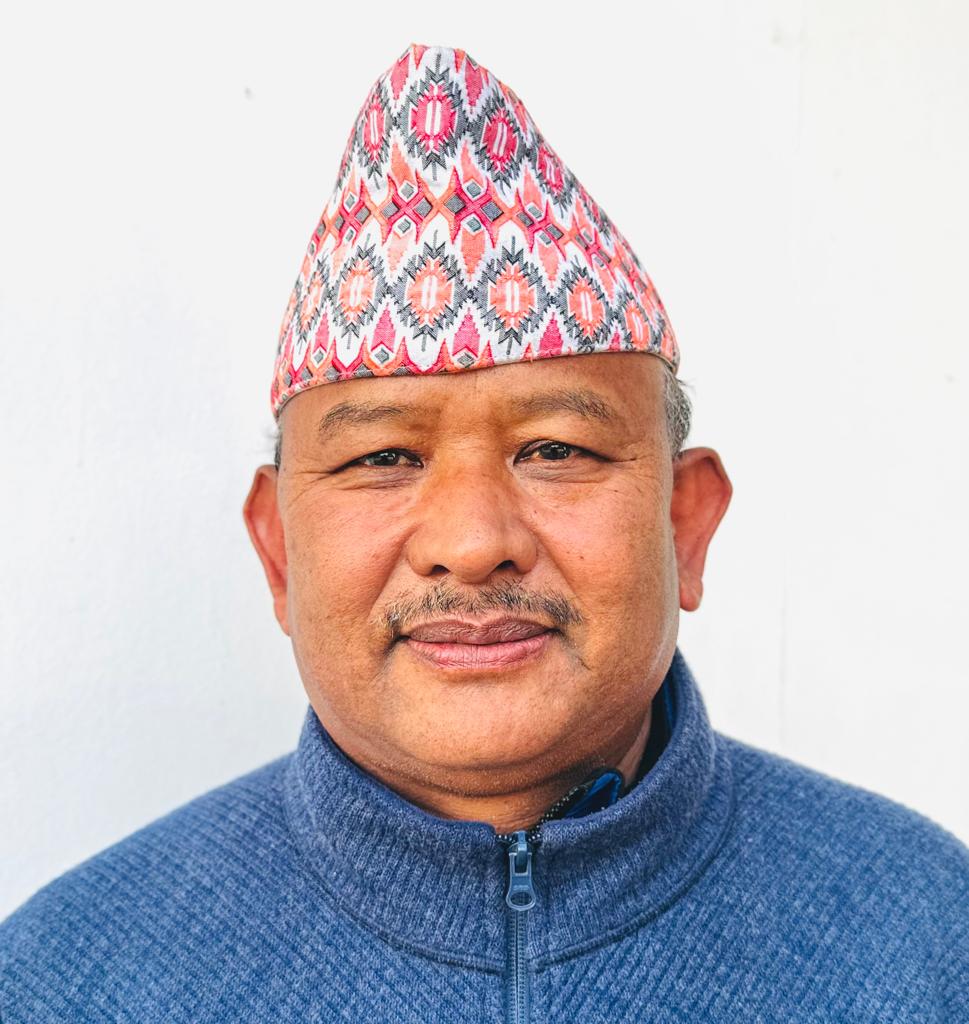
“My first job offer came through the Ministry of Physical Planning and UNDP. I was posted to Dhankuta district in eastern Nepal to provide technical support and supervise the reconstruction of earthquake‑damaged school buildings. It was remote work—long walks, difficult terrain, very basic conditions—but it exposed me to the realities of rural development.”
“During that time, the District Development Committee (government) asked our team to help assess the existing situation and functional status of previously funded community water systems in the remote locations. We spent weeks visiting villages, checking intake infrastructure, pipelines, reservoir tanks and taps; seeing what was functioning and what had been abandoned. That was my first real immersion in community water supply.”
“I supervised more than twenty water systems in those early years. Later, I was assigned to a larger gravity‑flow scheme funded by the Koshi Hills Development Program. That experience—tracing water from source to tap and working directly with communities—built the foundation of my understanding of rural water.”
“In 1993 I joined NEWAH a national level specialist NGO, supported by WaterAid, where I had an opportunity to work in my home region. This allowed me to work closely with local governments, communities, and small farmers groups to plan, design, construct and run their community managed water supply systems. I saw firsthand how women and adolescent girls were walking two to three hours every day to collect water – several times a day – for their family and domestic use. When the construction of water supply systems was completed and water flow started in their community taps they would say, ‘You have lifted our burden. Even our back pain is gone.’ Those moments were deeply emotional. They convinced me that this was meaningful work worth dedicating my life to.”
How has investing in leadership development impacted you and your work?
“After more than three decades in the sector, joining the Pathway Program was transformative. It provided me with conceptual and foundational frameworks, tools, and stories from leaders around the world that helped me rethink what leadership actually means.”
“Until then, I often equated leadership with position – being a manager, advisor or team leader. But the Program helped me to see leadership as a behaviour, a mindset, and a set of practices. It’s about how you show up and communicate, not the title you hold.”
“Pathway Program Level 1 especially helped me to recognise my own thinking patterns, to improve my self‑awareness, and adopt a more strategic mindset. It shifted me from ‘doing’ to ‘seeing’; seeing systems, relationships, and possibilities.”
“When our DFAT-Water for Women funded inclusive, climate resilient sustainable rural water supply service project ended in December 2024 in Nepal, I suddenly wasn’t leading a project anymore. I felt uncertain. But I remembered the idea of ‘leading without authority.’ Even in a new role as a GEDSI and Climate Integration Advisor, I realised I could still influence processes, build trust, ask good questions, and contribute from a different angle.”
“I have since gratefully moved on with SNV to work as the GEDSI and Climate Integration Advisor in the FCDO funded ‘WASH Systems for Health Project’ that SNV and WaterAid are implementing in Koshi and Madhesh Provinces of Nepal, through the Ministry of Water Supply and in coordination with Provincial Governments.”
“That period tested me, but it also reinforced that leadership isn’t limited to formal power. It’s about motivation, energy, persistence, and practice. That’s why I invested in Level 2 of the Pathway program using my own resources and with my supervisor helping to provide the time and space for practice. I could see Level 2 was helping me to grow and think from broader worldviews.”
“Now, colleagues increasingly seek my input. They say they appreciate my strategic thinking, my open questions, and my ability to connect ideas and people. The Program has helped raise my profile within SNV and in Nepal’s water sector more broadly.”
What are the most challenging aspects of leadership for you?
“The water sector—globally and in Nepal—is becoming more complex each year. Climate change is accelerating uncertainty: glaciers are melting, springs are drying, and rivers are changing. Communities feel these changes every day.”
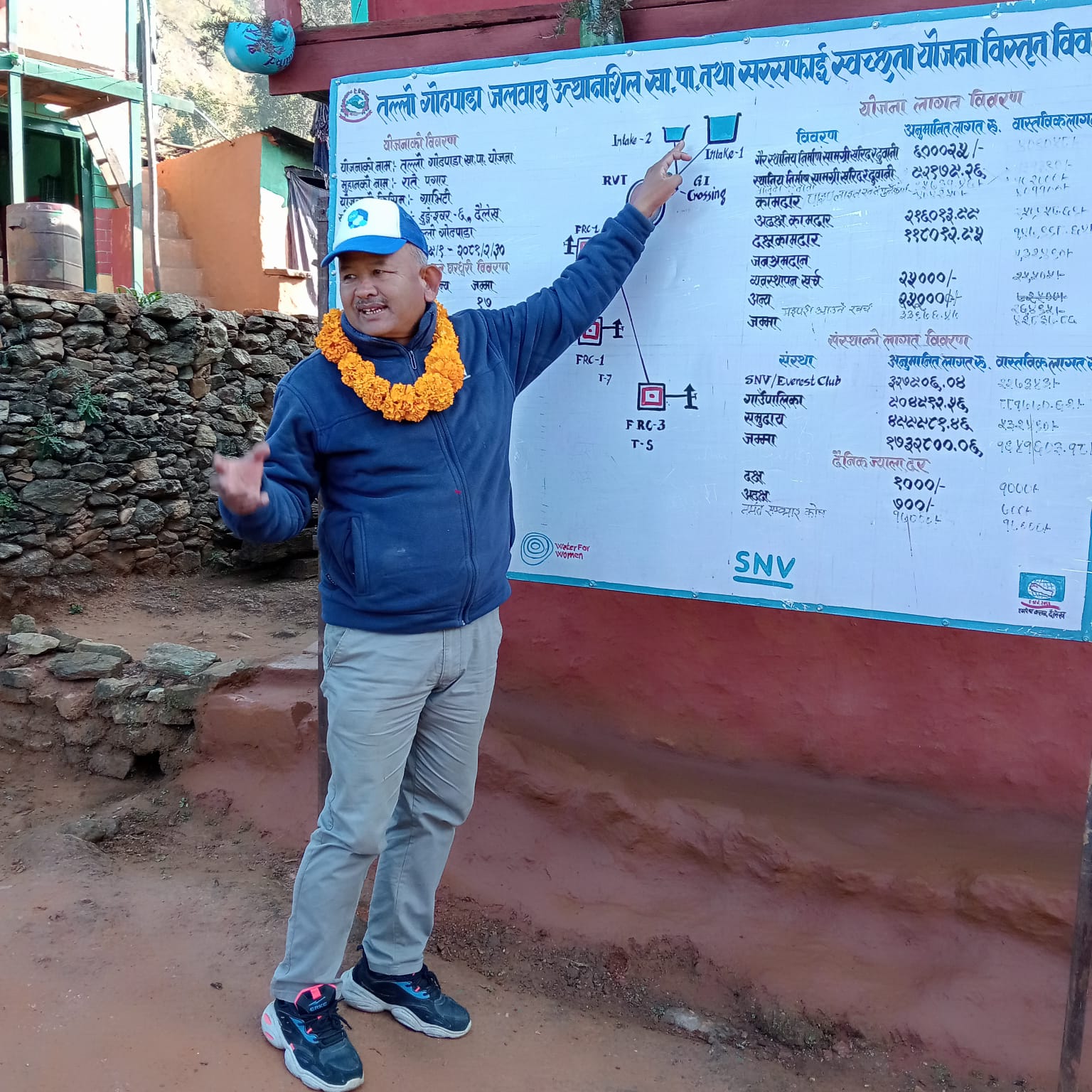 “There are many actors (government, multinational organisations, NGOs, donors, civil society, rightsholders organisations) and collaboration is often fragmented as there are three tiers of autonomous governments structures. Everyone is trying to contribute, but not always in a coordinated or complementary way.”
“Nepal’s new federal structure has created additional challenges. Roles and responsibilities between federal, provincial, and local governments are still evolving. Coordination isn’t always smooth. Political instability and frequent changes in leadership also make long-term planning difficult.”
“Funding for development is shrinking, and partners are shifting their priorities. That affects how the sector must operate—we need new modalities, new alliances, and new ways of thinking.”
“Perhaps the biggest challenge is building rapport and collaboration among stakeholders with different worldviews. Some focus mainly on their own institutional success rather than on collective progress. Encouraging cooperation across boundaries takes time and patience.”
“But there are positive signals too. The government is creating a policy environment with introducing a Water Sanitation Act, WASH Policy, new regulations, a National Adaptation Plan, and Nationally Determined Contributions. The government is also strengthening coordination among water sector relevant ministries, development partners, stakeholders through establishing community of practices under water energy commission. Recently, a senior provincial official spoke passionately about developing young engineers as leaders. His thinking aligned with what we discuss in the Pathway program. It shows that despite challenges, there is appetite for leadership development at different levels of the system.”
What does the future look like in terms of your leadership practice and development?
“Leadership means facing uncertainty honestly and still moving forward. Leadership development has taught me to approach complexity not as a barrier, but as an invitation to think creatively and collaboratively.”
“Looking ahead, I want to become a catalytic and trustworthy professional – someone who can bridge local and global perspectives. I want to support governments, civil society, right holders (including persons with disabilities) women and young professionals to co-create solutions.”
“I now try to view the water sector from a more holistic, systems perspective. With my three decades of field experience and the leadership principles I’ve learned—direction, alignment and commitment—I feel I can contribute more strategically.”
“Nepal is preparing to graduate from LDC status, our parliamentary election is in March, and most probably our political dynamics will shift. Funding patterns will change. None of this is predictable. But uncertainty shouldn’t stop us from exploring opportunities to contribute.”
“To broaden my perspective further, I’ve enrolled in an MPhil in Development Studies at Kathmandu University. Through this, I want to understand more deeply how education and development connect, and how we can design systems that support both.”
“I don’t know exactly where my journey will lead. But I’m committed to learning, to growing, and to staying involved in the water sector in whatever meaningful way I can.”
Closing Thoughts
“Water is life, and water is in crisis, both globally and locally. With so much complexity and uncertainty, the sector urgently needs professionals who are willing to lead themselves and help others rise as leaders.”
“Every one of us can contribute through our work, our relationships, and our communities. We all have a role in strengthening water security and ensuring safely managed water services for every person on the planet.”
“If we each invest in leadership—our own and each other’s—we can make a meaningful difference towards the transformative changes that society and the world need most.”
More information
If you want to learn more about leadership development then please read more about Water Leadership Program (if you are living in AU/NZ) or Pathway Program (if you are living and working in another country). Contact us on IWC_training@griffith.edu.au for the opportunity to talk through your aims and needs. We are always happy to partner and collaborate.