

Introduction
Welcome to the ninth episode of The Leadership Stream blog series from the International WaterCentre (IWC).
Water leadership is an essential process to ensure that teams, projects, programs and processes of change are successful. Water leaders work collaboratively to achieve a common direction and sense of purpose, to align resources with that direction and generate motivation and commitment to success (read more here). They require particular skill sets and behaviours to be effective in this work, skills and behaviours that can be developed through a mix of approaches including conscious practice, feedback, coaching, mentoring and learning from research about what works and why.
The purpose of this blog series is to profile emerging water leaders globally, their practices, and how they go about improving their capabilities through leadership development in various ways. Through this our aim is to build wider appreciation of the value of engaging in water leadership development, and ultimately to foster the growth of water leadership capacity globally.
Meet Declan Hearne – Principal Catchment, Land and Heritage
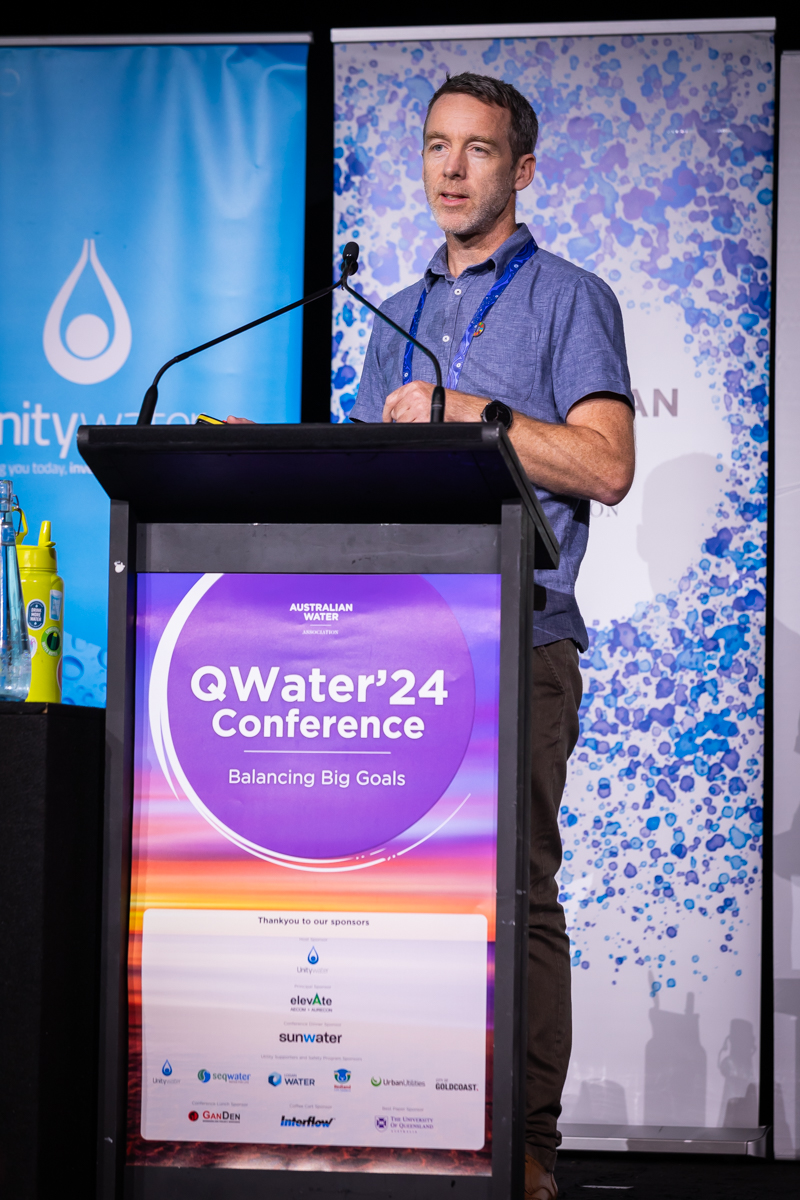
In this episode of the blog, we talk with Declan Hearne, Principal Catchment, Land and Heritage with Seqwater. Declan completed the IWC’s Water Leadership Program (WLP) in October 2016. We will start off by building a picture of Declan’s backstory – how and why did he move into the water sector and his current role with Seqwater?
“I hear quite a lot that there are two types of people in the water sector. There are people who stumbled into it and love it, and then there are people who were always going to end up in water. I’m one of them.”
“My story goes right back to being on the farm where I grew up in south-east Ireland. I can remember following the streams while my father was draining marshland to increase the productivity of the land. What interested me wasn’t the farming side of it, it was the flow of water.”
“Another experience that stayed with me was seeing my family deal with a water pollution incident on the farm. I remember the stress in the household and the feeling that people were more interested in prosecution than understanding the realities and challenges of small farming.”
“Years later, when I got my first formal job as a water pollution officer, my father rang me and asked what I was doing. That was when the penny dropped for me. I realised I wanted to be the person who walked into those situations and understood the challenges people were facing. I wanted to use influence and understanding to improve outcomes rather than simply chase prosecutions.”
“As my career progressed through environmental science, landscape management, international development, governance and emergency response, I came to realise that the environment itself wasn’t usually the issue. The real challenge was how people and institutions managed the landscape. That shifted my focus towards policy, governance and people and that’s what ultimately led me to broader land management and caring for Country work in Seqwater Catchment, Land and Heritage team.”
How has investing in leadership development impacted you and your work?
“At one point in my career, I thought the next thing I needed to learn was economics. I thought understanding the economics behind environmental outcomes was the next capability I needed to invest in. Then the opportunity to undertake The IWC Water Leadership Program came along.”
“What it helped me do was lift my head up and see how all these different areas of expertise connect together. Halfway through the program it almost felt like a wellness course because it was so enlightening.”
“I realised that I already had instincts about how leadership worked, but I lacked the frameworks and language to confirm what I thinking. Leadership development gave me tools that helped validate or challenge what my gut was telling me.”
“The real impact came later when I moved into a large government authority with complex structures and roles and accountabilities. That’s where I saw just how important leadership skills are. You need to be able to influence around you while still delivering your mandated responsibilities.”
“The idea of people staying in their lane has never sat comfortably with me. Staying in your lane can deliver a compliance outcome, but it can also mean missing other opportunities. Leadership is about having the curiosity to imagine alternative pathways, courage to challenge and ask whether there is a better way forward, and the wisdom to understand there will always be trade-offs.”
“I deliberately leaned into enabling leadership. My focus became enabling people to do more, not getting more out of people. I had seen authoritative leadership create stress without necessarily creating better outcomes. If you can unlock people’s motivation and help them succeed, that is far more powerful.”
What are the most challenging aspects of leadership for you?
“One of the biggest challenges is helping people understand how they are turning up in the workplace and how their leadership behaviours are affecting others.”
“Working with my team leaders I asked them to reflect on what they look like on a good day and on a bad day, but I try to start with myself, modelling the way. On a good day, I think I’m an enabling leader who creates space for people to succeed. On a bad day, I can get too involved in the detail and start taking control – and that can disempower.”
“When people can honestly reflect on themselves, those conversations become productive. When someone isn’t really seeing how they’re turning up, leadership becomes much more challenging because you’re not starting from the same understanding.”
“Another challenge for me is letting go. I’m a practical learner and I like understanding the detail. But as teams get larger, you simply can’t be across everything. You have to learn to lead without being in the middle of every issue.”
“That comes back to trust. One of my mentors, Leith Boully, had a saying that really stuck with me: people have my trust until they break it. That creates room for people to try, to learn, to fail early and improve. Trusting people is one of the most important leadership practices I’ve learned.”
What impacts do you see leadership development having organisationally, beyond the individual?
“For me, one of the strongest arguments for leadership development is that it helps people lift their heads out of their own tasks and see the broader organisation.”
“It helps break down silos. It helps people recognise opportunities to work across boundaries. Ultimately, I believe that improves outcomes, whether they’re project outcomes, organisational outcomes or cultural outcomes.”
“Leadership development helps people understand that they’re part of something bigger than their own technical role. Working across boundaries can make things slower at times, but it also leads to more thoughtful and informed decisions.”
“It builds culture. And culture matters enormously.”
“One thing I’ve tried to bring into organisations is a focus not only on what we have to deliver, but how we deliver it. How do we influence the organisation? How do we work across silos? How do we show up as individuals and leaders?”
“Importantly, leadership isn’t only about team leaders. It’s about teams that lead. If you can create space for everyone to think and act like a leader, you build capacity that goes far beyond any one person, it empowers individuals to take responsibility and drive collective action and performance.”
What does the future look like in terms of your leadership practice and development?
“As I think about the future, the question that keeps coming back to me isn’t ‘Are you happy?’ It’s ‘Are you growing? Are you still being challenged?’”
“I’m well into the second half of my career now, but I still want to learn. I’ve moved across environmental science, physical science, social science, governance and leadership, and I still find myself being challenged by new ideas and new perspectives.”
“You don’t always enjoy challenge in the moment, but challenge is where growth happens. Some of the most valuable experiences I’ve had came from being stretched, listening to different perspectives and learning from people with very different expertise.”
“One area that really interests me now is how we bring together different ways of thinking. We are very comfortable with concepts like human-centred design, but what can we learn from First Nations System thinking, concepts like ‘Dadirri’ and Country-centred ways of thinking? How do we bring those perspectives into organisations and decision making?
“The future of leadership practice is being comfortable wrestling with complexity and duality. It’s recognising that there can be more than one right answer, and that what is right often depends on the values being brought to the conversation.”
“Leadership is about finding ways to deliver value while remaining true to your values, even when circumstances, priorities and politics are constantly changing.”
A final thought
“Leadership development opened my eyes. It gave me tools and frameworks, but more importantly it helped me trust my instincts while also challenging them.”
“So if I was leaving readers with one question, it would simply be this: Are you still growing? Are you still being challenged? Still making a meaningful contribution? Then you’re on the right path.”
More information
If you want to learn more about leadership development then please read more about the Water Leadership Program (if you are living in AU/NZ) or Pathway Program (if you are living and working in another country). Contact us on IWC_training@griffith.edu.au for the opportunity to talk through your aims and needs. We are always happy to partner and collaborate.