

Introduction
Welcome to the tenth episode of this blog series from the International WaterCentre (IWC).
Water leadership is an essential process to ensure that teams, projects, programs and processes of change are successful. Water leaders work collaboratively to achieve a common direction and sense of purpose, to align resources with that direction and generate motivation and commitment to success (read more here). They require particular skill sets and behaviours to be effective in this work, skills and behaviours that can be developed through a mix of approaches including conscious practice, feedback, coaching, mentoring and learning from research about what works and why.
The purpose of this blog series is to profile emerging water leaders globally, their practices, and how they go about improving their capabilities through leadership development in various ways. Through this our aim is to build wider appreciation of the value of engaging in water leadership development, and ultimately to foster the growth of water leadership capacity globally.
Meet Layla Hosseini – Senior Project Manager, Major Infrastructure and Capital Programs
In this tenth episode of the blog we talk with Layla Hosseini, award winning Senior Project Manager with Sydney Water. Layla completed the IWC’s Water Leadership Program (WLP) in October 2025. We will start off by building a picture of Layla’s backstory – how and why did she move into the water sector and end up in her current role with Sydney Water?
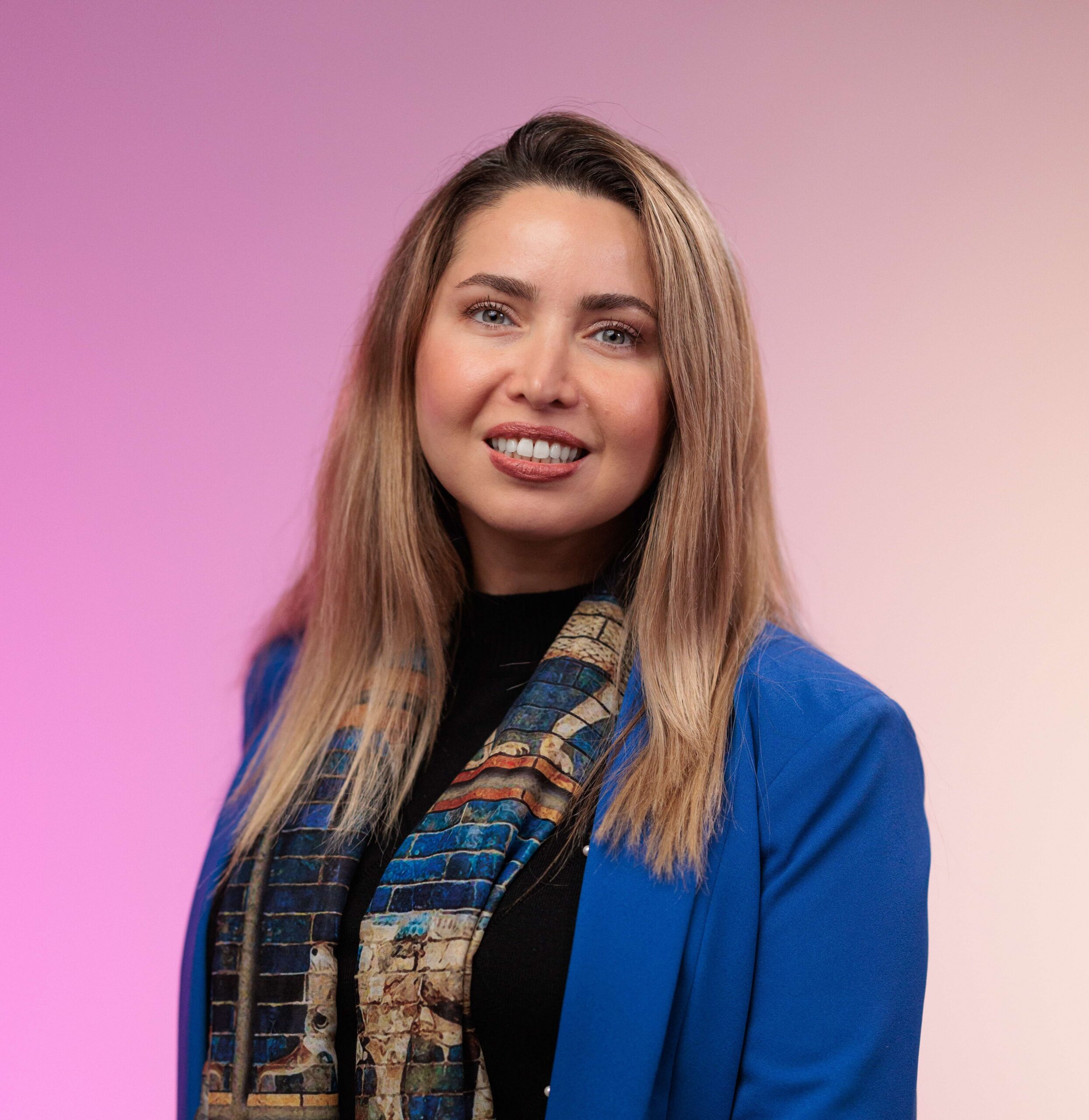
“My background is process engineering. Growing up in Iran, the natural pathway for somebody with my skills was oil and gas and petrochemicals. That was the world I came from. But when I moved to Australia to undertake a PhD, I knew I didn’t want to go back to that industry. I wanted to do something peaceful, something that was genuinely needed by communities.
At the same time, I was thinking a lot about sustainability and the Sustainable Development Goals. I had spent years interested in social issues, poverty, equality and access to basic human needs. Even when I was young, I was involved with organisations working on poverty, clean water and community development. I met people who didn’t have access to clean water, sanitation, dignity or opportunity. Seeing those realities firsthand stayed with me.
Growing up, I had also seen how conflict, inequality and disadvantage shaped people’s lives. Those experiences gave me a strong sense that I wanted my work to contribute to something bigger than myself.”
“Around that time, I attended a program called Unleash the Power Within. One of the questions was simple: what do you want to do with your life? When I really reflected on that question, I kept coming back to people. I thought, if I want to help people flourish, one of the most important things I can contribute to is water. Water underpins health, opportunity, dignity and quality of life.
I came back from that event and searched online for ‘love water’. The first thing that appeared was Hunter Water’s ‘Love Water’ campaign. I remember thinking, that’s where I want to work.”
“Through my network at Engineers Australia, I connected with someone working at Hunter Water. I told my Engineers Australia peers, ‘I’m happy to volunteer—I simply want the opportunity to learn and gain experience.’ After an interview, I joined Hunter Water as a volunteer. A few weeks later, Colin Hancock reached out and offered me a paid role.
For an immigrant, that meant a lot. He trusted me before I fully trusted myself. I’ve never forgotten that because it showed me how powerful it can be when somebody sees potential in you and chooses to invest in your future.
Looking back, my whole career journey has really been driven by a love of people and a love of water.”
“From there I deliberately sought out opportunities that would broaden my perspective. I moved through research, advisory work, infrastructure planning, project delivery and site-based engineering roles. I wanted to understand the whole system.
Eventually, I reached a point where I felt I had enough technical, commercial and operational experience to contribute more broadly. What motivated me was the belief that infrastructure isn’t simply about delivering a project on time and on budget. It’s about creating lasting outcomes that genuinely serve communities.
When I later completed the IWC’s Water Leadership Program, it felt like the final piece of the puzzle. It helped me understand myself more clearly and gave me a language for the purpose that had been guiding my decisions all along.”
How has investing in leadership development impacted you and your work?
“The biggest impact for me has been confidence.
Earlier in my career, I would look at leaders I admired and wonder whether I needed to become more like them. They were successful, but many of them led very differently to me. I kept asking myself whether my natural style was enough, or whether I needed to change who I was in order to be effective.
Leadership development helped me understand my strengths more deeply and gave me permission to lead authentically. It helped me realise that leading with curiosity, empathy, collaboration and genuine care for people were not qualities I needed to overcome. Those qualities were actually strengths that I could build on. Leadership development did not change who I am—it gave me the confidence to become more of the leader I already was.”
“The other major shift was practical. The program expanded my leadership toolkit.
Earlier in my career, I avoided difficult conversations. I struggled with addressing underperformance because I misunderstood what caring for people meant. I thought caring meant keeping people happy all the time. Over time, I realised that genuine care also requires courage, clarity and accountability. Leadership is about helping people grow—and growth is not always comfortable.
The program gave me the tools to have those conversations while staying true to my values. It helped me become more comfortable adapting my leadership approach to different situations and different people.
What I’ve seen since then is that when people know they are supported, challenged and trusted, they show up as the best version of themselves.”
“Confidence is contagious. When leaders are grounded in who they are, people around them feel more secure. They trust more, contribute more and grow more.
Ultimately, leadership development didn’t change my values. It gave me the confidence and capability to lead through those values and create environments where people can flourish.”
What are the most challenging aspects of leadership for you?
“One thing leadership has taught me is that today’s challenge can become tomorrow’s strength.
The areas I struggled with most earlier in my career, particularly confidence and direct communication, are now areas that other people often identify as strengths. That has been a really rewarding lesson because it reminds me that growth is possible if you’re willing to work on your blind spots.”
“At the moment, my biggest challenge is learning how to influence without formal authority.
As the programs I work on become larger and more complex, success depends less on the decisions I personally make and much more on my ability to bring people together around a shared purpose. Most of the people I need to influence don’t report to me. In many cases, they’re more senior than me.
Earlier in my career, I thought the best technical solution would naturally win. Leadership taught me that even great ideas create value only when you can bring people with you.”
“Technical expertise is essential for complicated problems, but complex challenges require something different. They require people to come together, understand different perspectives and work through uncertainty together.
One of my biggest growth areas has been moving from a mindset of persuasion to a mindset of curiosity. Instead of trying to convince people that my solution is the right one, I seek first to understand what matters to them, listen deeply and help shape an outcome people can own together.
The lesson I keep coming back to is that influence is not conferred by a title; it is earned through trust. For me, that trust is built through credibility, consistency, relationships and genuine care. It takes time, but it is far more powerful than authority alone.”
What impacts do you see leadership development having organisationally, beyond the individual?
“One of the simplest but most powerful ideas I took from the IWC’s Water Leadership Program is that leadership is the process of influencing for a better outcome.
It sounds simple, but organisationally it changes everything. When people see leadership as influence rather than position, they stop asking, ‘Is this in my job description?’ and start asking, ‘What can I influence to create a better outcome?’
Organisational charts define accountability, but they don’t define leadership. Role clarity and governance matter, yet leadership can—and should—happen at every level of an organisation.”
“When that mindset spreads, organisations become more collaborative, more innovative and more resilient because leadership becomes distributed rather than concentrated in a few people.
People recognise that they have agency. They recognise that they can contribute beyond their formal role. They start caring about outcomes beyond their immediate responsibilities. That’s when culture begins to change.”
“I also feel strongly that high performance and genuine care for people are not competing priorities. In fact, they reinforce one another.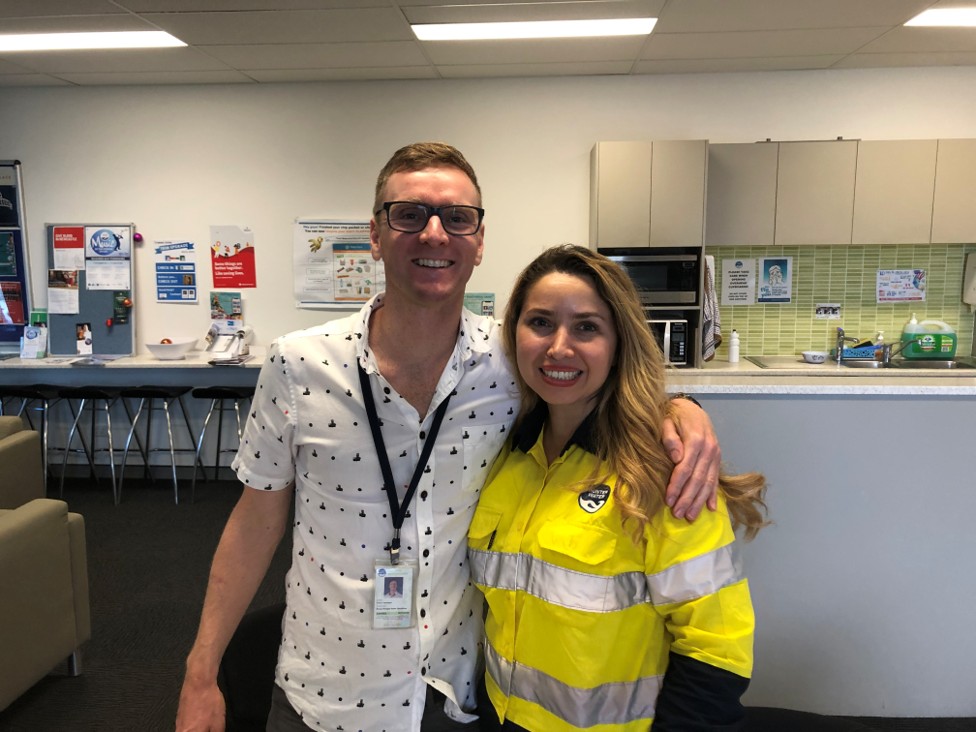
Leaders who care invest in people’s growth. They create psychological safety. They have honest conversations. They provide feedback and support people through challenges. Care does not lower the bar; it creates the trust and clarity that help people meet it.
For me it comes down to a simple idea: when people flourish, organisations flourish.”
“I’ve seen this in practice. The most successful projects I’ve been involved with were not successful because of one person’s technical expertise. They succeeded because people trusted one another, worked towards a shared purpose and created an environment where everyone could contribute.
Leadership development is not simply an investment in individuals. It builds culture. It creates workplaces where more people choose to lead, support one another, take ownership of outcomes and leave their teams stronger than they found them.
Ultimately, that leads to better outcomes not only for organisations, but also for the communities they serve.”
What does the future look like in terms of your leadership practice and development?
“Every year I take a day to myself, usually in nature, and ask some of the bigger questions about where I’m going and who I want to become. Those reflection days are some of the most valuable days of my year because they remind me that leadership is a lifelong journey, not a destination.
Every new experience teaches me something about myself and creates another opportunity to grow.”
“My purpose is to help create a world where people can flourish. For me, flourishing means having access to the things that allow people to live with dignity and opportunity: clean water, sanitation, education, meaningful work and a healthy environment. I see sustainability, reducing inequality, strengthening communities and developing future leaders as different expressions of that same purpose.”
“Looking ahead, I want to continue developing my ability to influence at a broader systems level.
Challenges such as climate resilience, population growth, digital transformation and artificial intelligence cannot be solved by one organisation or one discipline alone. They require leaders who can connect strategy with delivery, bring diverse people together around a shared purpose and create better outcomes for society.
I also want to continue investing in people. I’ve been fortunate to have mentors, coaches and leaders who believed in me, challenged me and helped me grow. I want to do the same for others.”
“Ultimately, I don’t want my legacy to be measured only by the infrastructure I helped deliver. I want my legacy to be measured by the people I helped become leaders themselves.
For me, love in leadership is not a soft concept. It shows up as service, respect, courage, accountability and helping others become the best version of themselves.
If my leadership helps people flourish, strengthens organisations and contributes, even in a small way, to a more sustainable, equitable and resilient world, then I know I am living my purpose.”
A final thought
“I don’t want my legacy to be measured only by the infrastructure I helped deliver. I want it to be measured by the people I helped become leaders themselves.”
Layla’s reflection leaves us with a question: How can each of us develop our leadership so that we not only deliver better outcomes, but also help others grow into leaders?
More information
If you want to learn more about leadership development then please read more about the Water Leadership Program (if you are living in AU/NZ) or Pathway Program (if you are living and working in another country). Contact us on IWC_training@griffith.edu.au for the opportunity to talk through your aims and needs. We are always happy to partner and collaborate.