SDG 6.5.1: Supporting Pacific Countries to Strengthen IWRM Reporting
Author: Suliasi Batikawai, Senior Research Assistant, 31 July 2026
The International WaterCentre at Griffith University, in partnership with UNEP-DHI, is supporting Pacific Island countries through the 2025 cycle of reporting for SDG indicator 6.5.1. The indicator measures progress in implementing Integrated Water Resources Management (IWRM) across four dimensions: enabling environment, institutions and participation, management instruments, and financing. Importantly, the survey also provides countries with a practical framework for identifying strengths, gaps and priorities for improving water governance.
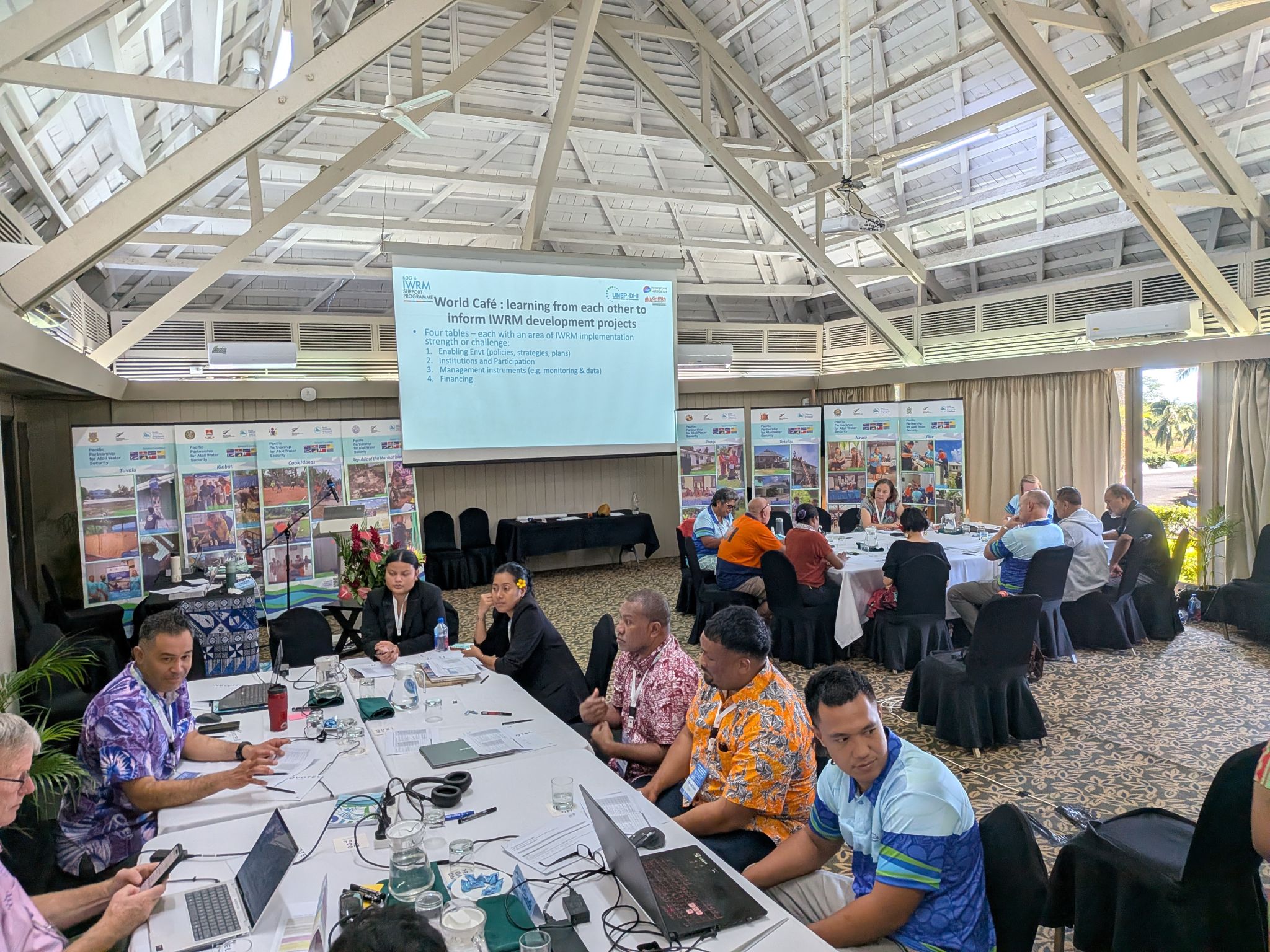
As part of this support, an in-person workshop was delivered on 25 June during the 2026 Pacific Partnership for Atoll Water Security Meeting in Nadi, followed by an online regional webinar on 10 July. Participants worked through the survey and scoring template, assessed their confidence in responding to each question, identified where further evidence was needed, and began planning stakeholder consultations.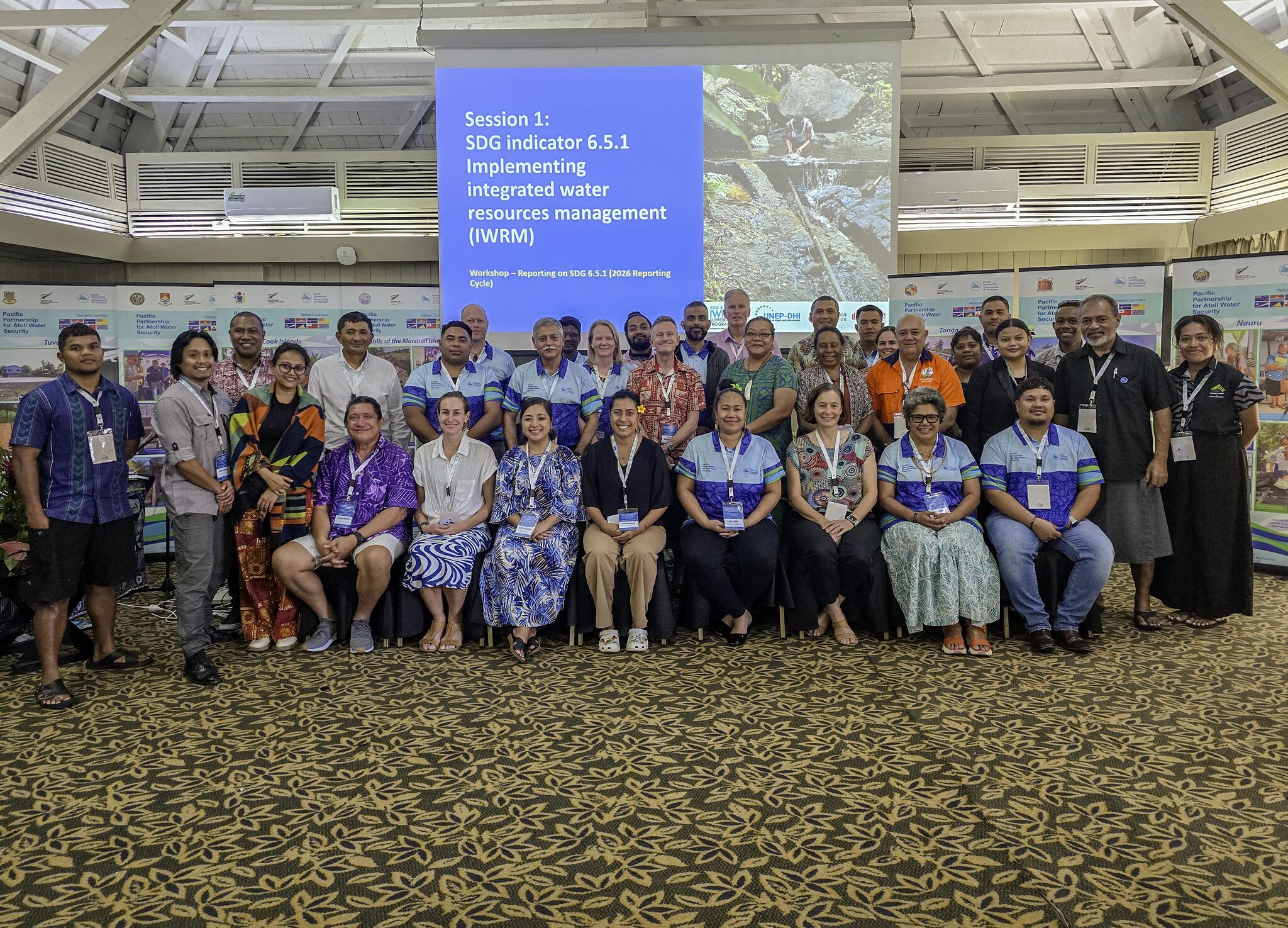
The 10 July webinar provided a smaller, practical working session for Pacific focal points and country representatives to raise country-specific questions and work through the survey dimension by dimension. Key discussions focused on approaches to monitoring water availability, interpreting the financing questions, and identifying who should be involved in stakeholder consultation. The webinar also reinforced that the survey is a national self-assessment tool, rather than a competition between countries, and is intended to help each country track its progress over time.
Key takeaways so far
A key learning from the project is that SDG 6.5.1 reporting cannot be completed effectively by one agency alone. Water resource management responsibilities are often shared across government departments responsible for water, climate change, environment, land-use planning, health and public utilities. Pre-workshop responses indicated that countries expected to consult between three and eight ministries, departments or stakeholder groups. Participants also identified the need for stronger collaboration mechanisms, clearer data-sharing arrangements and access to current information.
The workshop also demonstrated the importance of interpreting the survey within each country’s context. Transboundary water management questions were considered less directly relevant to several small island countries. In Naoero, however, groundwater monitoring and protection remained highly relevant even though groundwater is not generally used for drinking. Tuvalu’s discussions similarly highlighted the need for collaboration between the Climate Change Department and Public Works and Water.
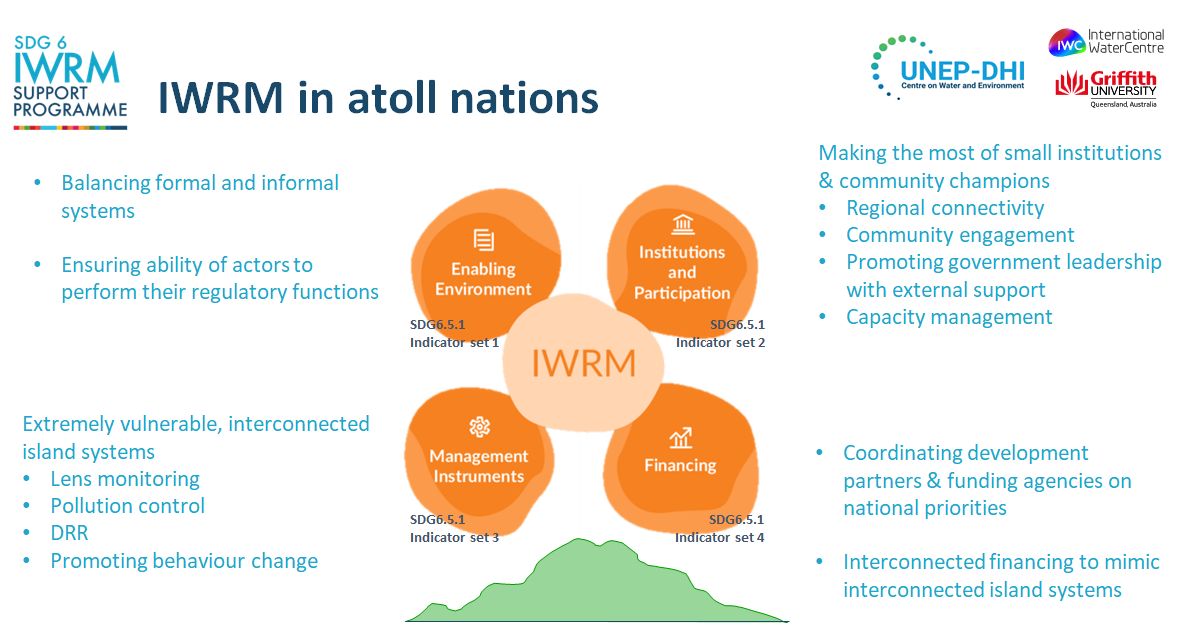
Financing emerged as one of the most challenging dimensions. Discussions emphasised that countries should consider national budgets, tariffs and transfers, as well as external development-partner funding. The financing discussions also noted that funders look for a cohesive national strategy, a clear vision for managing water resources, and evidence of coordination across government agencies and stakeholders.
Countries were at different stages of preparing their SDG 6.5.1 survey responses, but the practical workshop activities helped teams progress their draft scoring, identify information gaps and plan stakeholder consultations. Peer-learning activities also allowed participants to exchange experiences on drought monitoring, survey validation and the challenge of embedding IWRM financing within national budgets.
The next phase of support will focus on helping focal points consult relevant stakeholders, refine their draft responses and prepare their national submissions. The first draft reporting deadline is 7th August 2026, followed by Help Desk review, with final submissions due by 1st October 2026.