

Beyond Awareness: Soap, Coconut and the Everyday Infrastructure of Handwashing in Rural Vanuatu
Author: Dr Mark Love, Research Fellow (IWC), 15 October 2026
A low-cost intervention, a persistent gap
Handwashing with soap is among the most cost-effective public health interventions available, reducing the risk of diarrhoeal disease by around 40% (Curtis & Cairncross, 2003; Freeman et al., 2014). Yet in 2024, 1.7 billion people still lacked a handwashing facility with soap and water at home (WHO & UNICEF, 2025). Global Handwashing Day, held each year on 15 October, was established by the Global Handwashing Partnership in 2008. In its first year, more than 120 million children in over 70 countries washed their hands with soap (Global Handwashing Partnership, n.d.). Nineteen years on, the central lesson of hygiene research is unchanged. Knowing that handwashing matters is a necessary condition for practice, but rarely a sufficient one.
Across the Pacific, hygiene has tended to receive less attention than water supply and sanitation. WHO and UNICEF have noted limited progress on household handwashing facilities in several Pacific Island countries (WHO & UNICEF, 2021). The surge in handwashing stations during COVID-19 showed what rapid mobilisation can achieve. It also showed how quickly temporary infrastructure deteriorates once attention shifts elsewhere. Many rural households depend on rainwater tanks or gravity-fed schemes exposed to drought and cyclones, while soap must be imported, shipped between islands and bought with scarce cash. Handwashing in the region is therefore as much a question of infrastructure, supply and household economy as of individual behaviour.
Vanuatu: uneven coverage, uncertain trends
The 2023 Vanuatu Multiple Indicator Cluster Survey (MICS) found that only 26.4% of rural household members had a handwashing facility with soap and water, compared with 62.1% in urban areas. Soap, rather than water, was the weak link. Provincial disparities are pronounced, ranging from 61.8% in Shefa to 16.2% in Tafea and just 5.6% in Torba (Vanuatu Bureau of Statistics [VBoS], 2024, Table WS.2.1). These provincial estimates should be read with caution, as their confidence intervals are wide: Tafea’s figure plausibly lies anywhere between 11% and 22%. By design, MICS also counts only soap or detergent, excluding ash, sand and other local cleansing agents, a point that becomes significant below.
Longer-term trends are difficult to establish, but the available evidence is not encouraging. The 2007 MICS did not measure handwashing (Ministry of Health & UNICEF, 2008), but the 2013 Demographic and Health Survey did, using similar observation methods. Between the two surveys, the share of the population with a handwashing place that enumerators could observe fell from 67% to 59% nationally, and from 62% to 52% in rural areas. Where facilities were present, little else moved. Water was available at around nine in ten, and soap at just over half, in both years (Ministry of Health et al., 2014, Table 2.13; VBoS, 2024, Table WS.2.1). A decade on, there is no evidence of progress.
Even the relatively reassuring water figures warrant caution, since a single survey visit cannot capture how reliably water is available across the year. In rural Vanuatu, where around 42% of households depend on rainwater tanks for drinking water (VNSO, 2021, Table 9.8), reliability is far from assured. More than half of the rainwater tanks assessed in one national study failed to supply water year-round (Foster et al., 2021), and even piped groundwater systems, the most dependable option, deliver year-round supply in only 71% of cases (UTS-ISF, 2025).
Evidence from Tanna and Emau
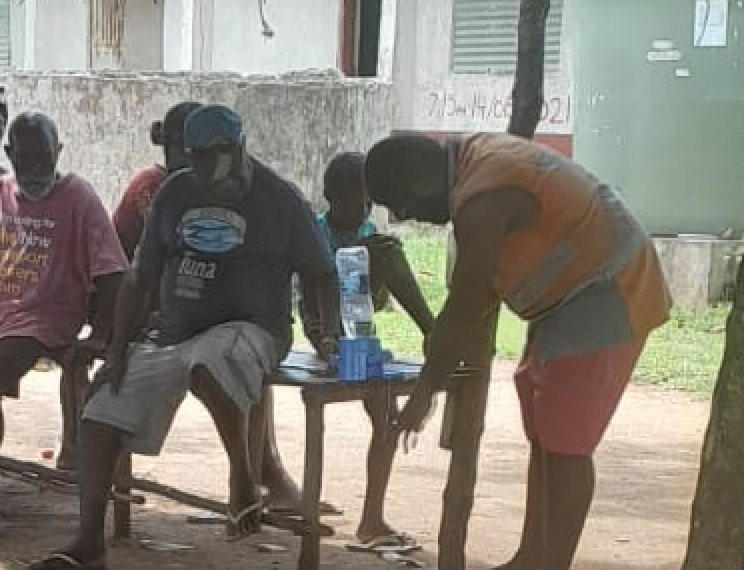
In 2025 and 2026, the International WaterCentre – with Robin Roberts (Griffith Business School), Engineers Without Borders Australia (Cedric Paniel, Vanuatu office) and numerous local ni-Vanuatu research associates[1] – undertook a WASH Supply and Demand Study for UNICEF Pacific (Love et al., 2026). It engaged around 300 participants across community, stakeholder and supplier activities. Community focus group discussions with more than 200 participants on Tanna (Tafea) and Emau (Shefa) were combined with key informant interviews, product demonstrations, willingness-to-pay exercises and a supply chain assessment in Port Vila and Lenakel. As a qualitative study of a small number of purposively selected communities, its findings are indicative rather than statistically representative. They were, however, validated through provincial and national stakeholder workshops and triangulated against national survey data and the wider literature.
[1] Field research was conducted by: Mark Love (IWC), Tanna and Emau), Daisy Garoleo (Port Vila and Tanna), Sandrine Kapalu (Tanna), Lucie Nakau and Ashley [Bella] Theophile (Emau).
Opportunity before motivation
Analysed through the FOAM framework (Focus, Opportunity, Ability, Motivation; Coombes & Devine, 2010), the findings suggest that the principal barriers to handwashing lie not in knowledge but in opportunity and ability. Awareness was widespread, but functional, toilet-adjacent facilities were rare. Tippy-taps and plastic containers introduced by earlier projects had cracked, rotted or lost their fittings, and were seldom repaired. Soap, at 60 to 100 vatu, is affordable at household level. Its purchase, however, often falls within the small budgets women manage, where it competes with more pressing needs. As a woman from the Isangel focus group explained:
“If you have money, you can go and buy soap at the store; if you do not have money, then there is none.”
These patterns echo global evidence that handwashing is sustained by habit and social norms far more than by knowledge (Curtis et al., 2009).
Soap and water also matter well beyond handwashing. Women in the study expressed a strong preference for reusable menstrual products, particularly period underwear and reusable pads. Yet these products can only be used hygienically, and discreetly, where households have reliable water, affordable soap and private space for washing and drying. Without them, a product valued for its durability becomes a source of both hygiene risk and social embarrassment. As a woman in Leulick, Central Tanna, observed:
“You can look after the reusable underwear and wash it after using it, but water and soap must be available; if not, the stain will be hard to remove.”
Coconut as cleanser: kastom, knowledge gap or opportunity?
Among the study’s most intriguing findings was the use of coconut as a soap alternative. Women from three different rural Tanna Area Council regions described regularly using grated green coconut flesh, with its milk and oil retained, as a customary cleanser for hands, face, hair and bathing children.
“Kastom ya. No yusum tumas sop ya, be kokonat i plante.”
That is custom. We do not use much soap, but there are plenty of coconuts.
(Women’s focus group, Isangel, Tanna)
Coconut is rich in lauric acid, which has shown antimicrobial activity in laboratory studies. Yet no WASH research appears to have tested whether coconut-based washing reduces faecal pathogens on hands under household conditions. The question matters most after disasters, when soap supply chains may falter but coconuts remain at hand. Co-designed research with the women who use coconut as a soap alternative could clarify its efficacy. It could also inform hygiene messaging that engages with kastom rather than dismissing it.
The challenge is to take such knowledge seriously without romanticising or simply dismissing it. Until evidence emerges, soap remains essential at critical moments, but perhaps can be promoted alongside customary practice rather than in place of it. Simple field testing of coconut, soap and water alone would show whether coconut offers real protection. Soap-making from coconut oil, suggested at the study’s final stakeholder workshop, may offer a practical bridge between the two.
As part of the research, the study socialised a selection of SATO products, including the SATO Tap (LIXIL Group Corporation, 2025). The Tap is a portable, gravity-fed handwashing station that uses an ordinary plastic bottle as its reservoir. It is operated hands-free with the back of the hand or forearm, uses about 100 ml of water per wash, and includes a soap dish. Its mechanical simplicity and frugal water use suit it to rainwater-dependent and off-grid rural settings, precisely where improvised fixtures have repeatedly failed.
Field evidence from elsewhere remains limited, deriving mainly from rapid prototype trials in East Africa and South Asia (mWater, n.d.; UNICEF & LIXIL, n.d.). These recorded positive first impressions of ease of use, water saving and portability. They also recorded requests for a higher flow rate and, in East Africa, a shortage of retailers selling bottles of a suitable size. Neither concern arose in Vanuatu. The common plastic bottles tested all worked well and are widely available. Participants also consistently framed the Tap’s low flow as an advantage during dry periods.
In Vanuatu, the Tap generated the strongest and most consistent response of any product assessed, with near-universal interest across all 13 participating groups. This was an unusual signal in communities otherwise sceptical of externally introduced hardware. Acceptability rested on water efficiency, durability and the Tap’s role as a visible prompt beside the toilet. That last point echoes trial findings elsewhere that the toilet is the most critical place for a handwashing station.
“The tippy-tap does not last and wastes a lot of water; this one would last a long time.”
(Ngarua focus group, Emau)
Indicative willingness to pay converged on 1,000 vatu [about AUD$12.00][2] across 39 community responses, with similar results on both islands, and was corroborated by key informants and institutional stakeholders. At a scale of around 10,000 units, estimated landed costs are roughly 395 to 550 vatu [AUD$470 to 6.60] delivered to Lenakel, suggesting that a retail price of 800 to 1,200 vatu would be commercially viable. This was the closest alignment between cost and willingness to pay found for any product in the study. At pilot volumes of a few hundred units, however, landed costs roughly double to around 1,050 vatu, leaving little or no margin unless costs are initially subsidised or stock is supplied on consignment.
[2] Australian dollar equivalents are approximate, calculated at the mid-market rate of AUD 1 = VUV 83.5.
Participants named schools, churches, nakamals and clinics as priority sites. Trial evidence suggests that such placement matters most when paired with norm-based promotion: handwashing stations alone had little effect, but combined with social norm messaging they substantially increased handwashing with soap (Amon-Tanoh et al., 2021).
Some participants also stressed that products purchased, rather than donated, are more likely to be maintained. Area Administrators from both Central Tanna and Emau indicated that their councils could allocate funds from future budgets to purchase taps for communal sites, should the product become available. A senior member of the Office of the Registrar of Cooperatives and Business Development Services also expressed interest int eh Cooperatives stocking the Tap.
Transformative potential: an open question
Whether the SATO Tap can transform handwashing practice in Vanuatu remains an open question. Enthusiasm at demonstration does not guarantee sustained use: bottles must be refilled, soap replaced and wastewater drained. A tap without soap is a cue without the means to act on it.
Nor can the product be separated from the supply chain that delivers it. Its availability depends on import duty, inter-island freight, retailers willing to carry stock, and a price within women’s budgets. Its continued use depends on who replenishes soap at a school or church, and on Area Councils, chiefs and church leaders sustaining the expectation of handwashing.
Answering these questions requires a well-designed, phased and carefully monitored introduction rather than a one-off distribution. Such an approach would test whether stated demand translates into purchase, and whether purchase translates into sustained handwashing. It should treat the enabling environment as integral to the product: public placement first, local retailers involved from the outset, soap supply arranged before installation, and structured monitoring and evaluation of use, soap availability and functionality at six and twelve months. Careful sequencing should not, however, become a reason for delay. Many communities have experienced repeated rounds of awareness-raising without lasting change, and in several sessions participants asked to buy a Tap on the spot.
As one chief on Emau reflected:
“We do not want people to come only to do awareness; we are already tired of that… As a chief, I want what you have told us to be real. You must make it happen [by making the Taps available for purchase].”
The views expressed are the author’s and do not necessarily reflect those of UNICEF. The author thanks the communities of Tanna and Emau, and colleagues at UNICEF Pacific, the Department of Water Resources and the Ministry of Health. Particular thanks to Area Administrators John Bill (Central Tanna) and Robson Misel (Emau) for their active support and engagement throughout the fieldwork. Sincere thanks to the private sector and civil society representatives who participated in workshops, advisory groups and/or interviews throughout the study. Sandrine Benjamin (UNICEF Vanuatu) kindly co-facilitated the Tanna WASH Storian) and Brecht Mommen (UNICEF Vanuatu) convened and co-facilitated the Final Stakeholder validation workshop.
References
Amon-Tanoh, M. A., McCambridge, J., Blon, P. K., Kouamé, H. A., Nguipdop-Djomo, P., Biran, A., & Cousens, S. (2021). Effects of a social norm-based handwashing intervention including handwashing stations, and a handwashing station-only intervention on handwashing with soap in urban Côte d’Ivoire: A cluster randomised controlled trial. The Lancet Global Health, 9(12), e1707–e1718. https://doaj.org/article/afcf486d618c40eb9db8d823b7a5bada
Coombes, Y., & Devine, J. (2010). Introducing FOAM: A framework to analyze handwashing behaviors to design effective handwashing programs (Working Paper). Water and Sanitation Program, World Bank. https://openknowledge.worldbank.org/handle/10986/17186
Curtis, V., & Cairncross, S. (2003). Effect of washing hands with soap on diarrhoea risk in the community: A systematic review. The Lancet Infectious Diseases, 3(5), 275–281. https://doi.org/10.1016/S1473-3099(03)00606-6
Curtis, V. A., Danquah, L. O., & Aunger, R. V. (2009). Planned, motivated and habitual hygiene behaviour: An eleven country review. Health Education Research, 24(4), 655–673. https://doi.org/10.1093/her/cyp002
Foster, T., Rand, E. C., Kotra, K. K., Sami, E., & Willetts, J. (2021). Contending with water shortages in the Pacific: Performance of private rainwater tanks versus communal rainwater tanks in rural Vanuatu. Water Resources Research, 57(11), e2021WR030350. https://doi.org/10.1029/2021WR030350
Freeman, M. C., Stocks, M. E., Cumming, O., Jeandron, A., Higgins, J. P. T., Wolf, J., Prüss-Ustün, A., Bonjour, S., Hunter, P. R., Fewtrell, L., & Curtis, V. (2014). Hygiene and health: Systematic review of handwashing practices worldwide and update of health effects. Tropical Medicine & International Health, 19(8), 906–916.
https://doi.org/10.1111/tmi.12339
Global Handwashing Partnership. (n.d.). About Global Handwashing Day. https://globalhandwashing.org/global-handwashing-day/about-ghd/
Love, M., Roberts, R., Paniel, C., Sanderson, R., Mrazek, K., & Souter, R. (2026). WASH Supply & Demand Study, Vanuatu: Water supply, sanitation, household water treatment & storage, handwashing and menstrual hygiene management [Unpublished final report prepared for UNICEF Pacific]. International WaterCentre, Griffith University.
LIXIL Group Corporation. (2025). SATO600 Tap: Technical specification sheet (Rev. 25-09). https://sato.lixil.com/wp-content/uploads/2025/09/SATO600-Tech-Spec-Sheet-Rev25-09.pdf
Ministry of Health, Government of Vanuatu, & UNICEF. (2008). Vanuatu Multiple Indicator Cluster Survey 2007: Final report. https://mics.unicef.org/surveys
Ministry of Health, Vanuatu National Statistics Office, & Secretariat of the Pacific Community. (2014). Vanuatu Demographic and Health Survey 2013: Final report. Secretariat of the Pacific Community. http://hdl.handle.net/10524/63710
mWater. (n.d.). SATO Tap rapid prototype testing [Rapid evaluation report prepared for the UNICEF/LIXIL Sanitation Market-Shaping Partnership]. https://sato.lixil.com/wp-content/uploads/2023/02/SATO-TAP-trial-report-Africa.pdf
UNICEF & LIXIL. (n.d.). SATO Tap prototype test: Bangladesh & India [Unpublished partnership report]. United Nations Children’s Fund; LIXIL Corporation (Make a Splash! Partnership).
University of Technology Sydney, Institute for Sustainable Futures [UTS-ISF]. (2025). Resilience in a changing climate: Advancing research on groundwater for equity. Rural Vanuatu groundwater country profile [Fact sheet].
https://drupal.uts.edu.au/sites/default/files/2025-05/RECHARGE%20VAN%20Factsheet.pdf
Vanuatu National Statistics Office. (2021). 2020 National Population and Housing Census: Basic tables report, Volume 1. https://fca.vu/wp-content/uploads/2022/08/Vanuatu-2020-population-and-housing-census.pdf
Vanuatu Bureau of Statistics. (2024). Vanuatu Multiple Indicator Cluster Survey 2023: Survey findings report. https://mics.unicef.org/surveys
World Health Organization & UNICEF. (2021, July 5). In the Pacific, thousands of people will still lack access to safe water, sanitation and hygiene in 2030 unless progress increases, warn WHO, UNICEF [Press release]. https://www.unicef.org/pacificislands/press-releases/pacific-thousands-people-will-still-lack-access-safe-water-sanitation-and-hygiene
World Health Organization & UNICEF. (2025). Progress on household drinking water, sanitation and hygiene 2000–2024: Special focus on inequalities. WHO/UNICEF Joint Monitoring Programme. https://data.unicef.org/resources/jmp-report-2025/